A customer asking for bizSAFE recognition may prompt a business to check its certificate. It should also prompt a review of how employees work, what could cause harm and whether agreed safety measures are being followed.
bizSAFE is a programme led by the Workplace Safety and Health Council to help companies build their safety capabilities. For businesses applying, renewing or progressing to a higher level, preparation should connect the required documents with everyday work.
Understand The Current Direction
In its 7 October 2026 parliamentary reply, the Ministry of Manpower explained that it and the Council are reviewing bizSAFE to strengthen the connection between recognition and actual workplace safety performance.
The review places greater attention on better safety practices. Businesses should follow the current published requirements while watching for confirmed changes.
A practical response is to check whether employees understand their responsibilities, supervisors address unsafe conditions and management follows up on unresolved problems.
Choose The Level That Fits Your Readiness
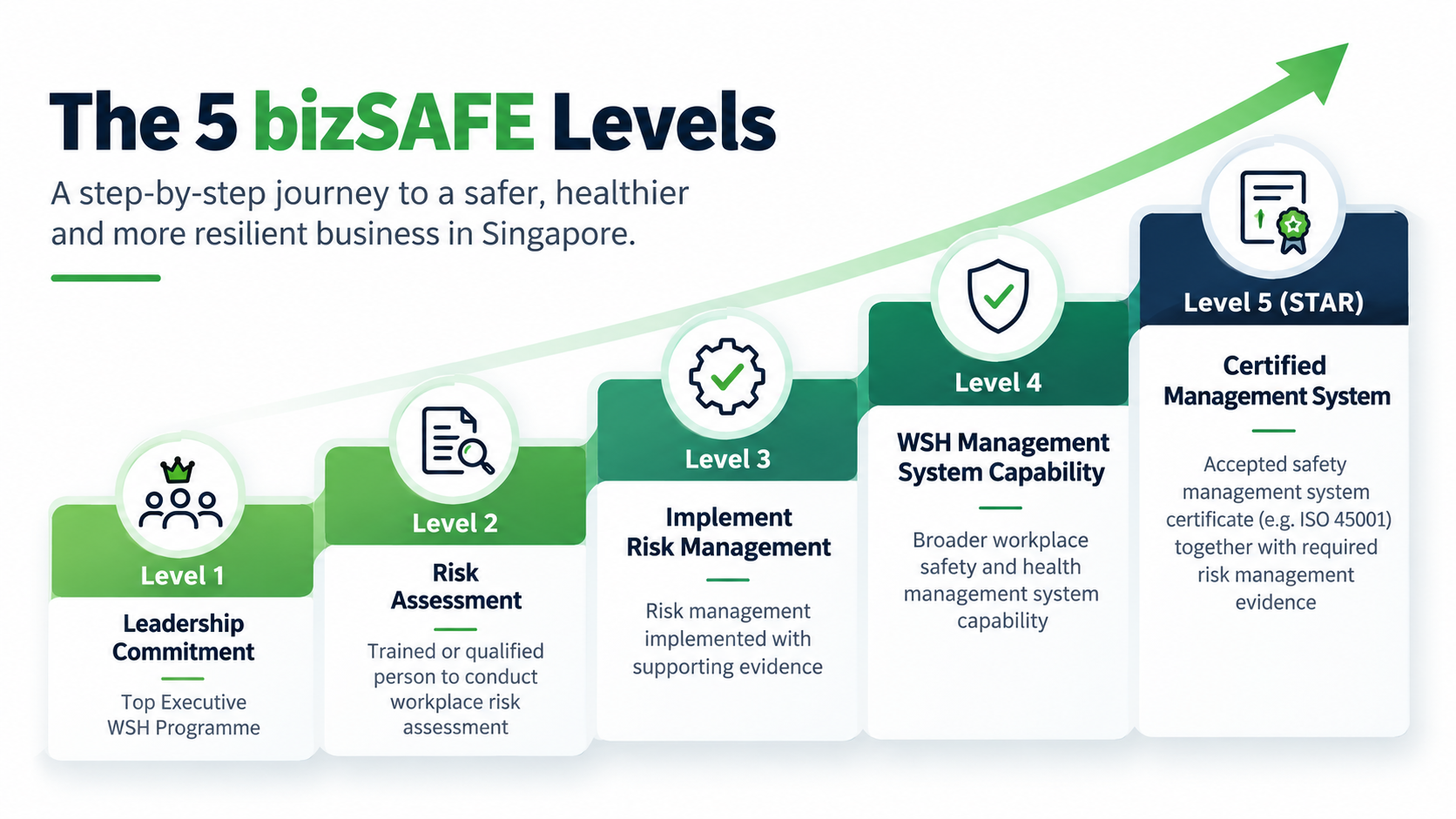
The programme has five levels. In simple terms:
• Level 1 starts with leadership commitment and the Top Executive WSH Programme for the company's CEO or a Board Director.
• Level 2 recognises a suitably trained or qualified person who can help the company assess and manage workplace risks.
• Level 3 recognises that workplace risk management has been put into practice, with the required supporting evidence.
• Level 4 adds the capability to develop a wider workplace safety and health management system.
• STAR requires an accepted safety management system certificate, such as ISO 45001, together with the required risk management evidence.
These are brief descriptions. Check the Council's detailed requirements before choosing courses or booking an audit. A company can apply directly for a level when it meets that level's requirements.
Review The Work Behind The Documents
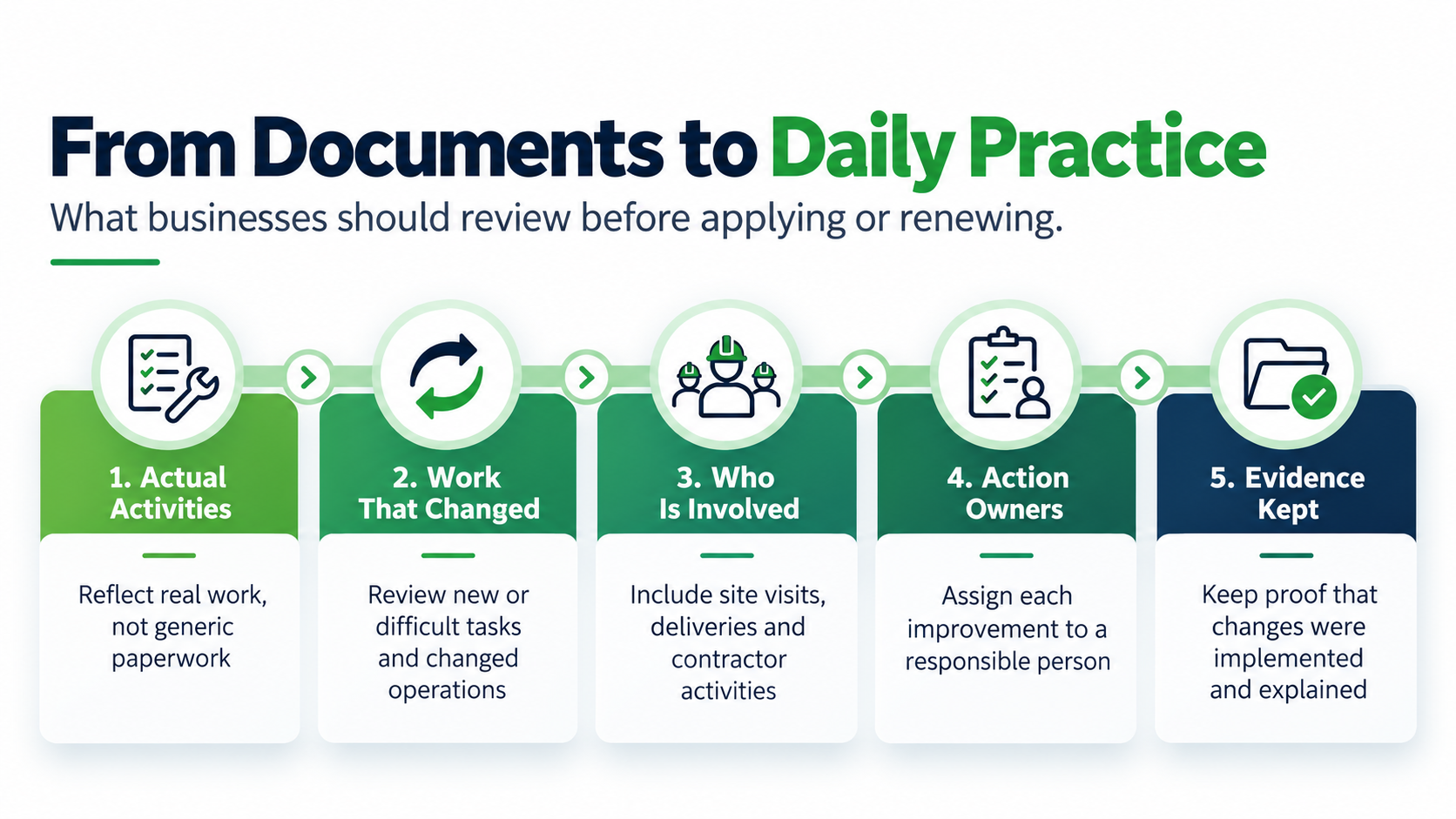
A risk assessment identifies what could harm people and what the business will do to prevent it. It should describe the company's actual activities.
Include work at customer premises, site visits, deliveries and contractor activities where relevant. Speak with employees about tasks that have changed or become difficult to carry out safely.
For example, a maintenance company may have added rooftop work since its last review. Its previous arrangements may need changes to access, supervision and emergency planning.
Assign someone to complete each agreed improvement. Keep evidence that the change has been introduced and explained to the people affected.
Prepare For The Right Audit
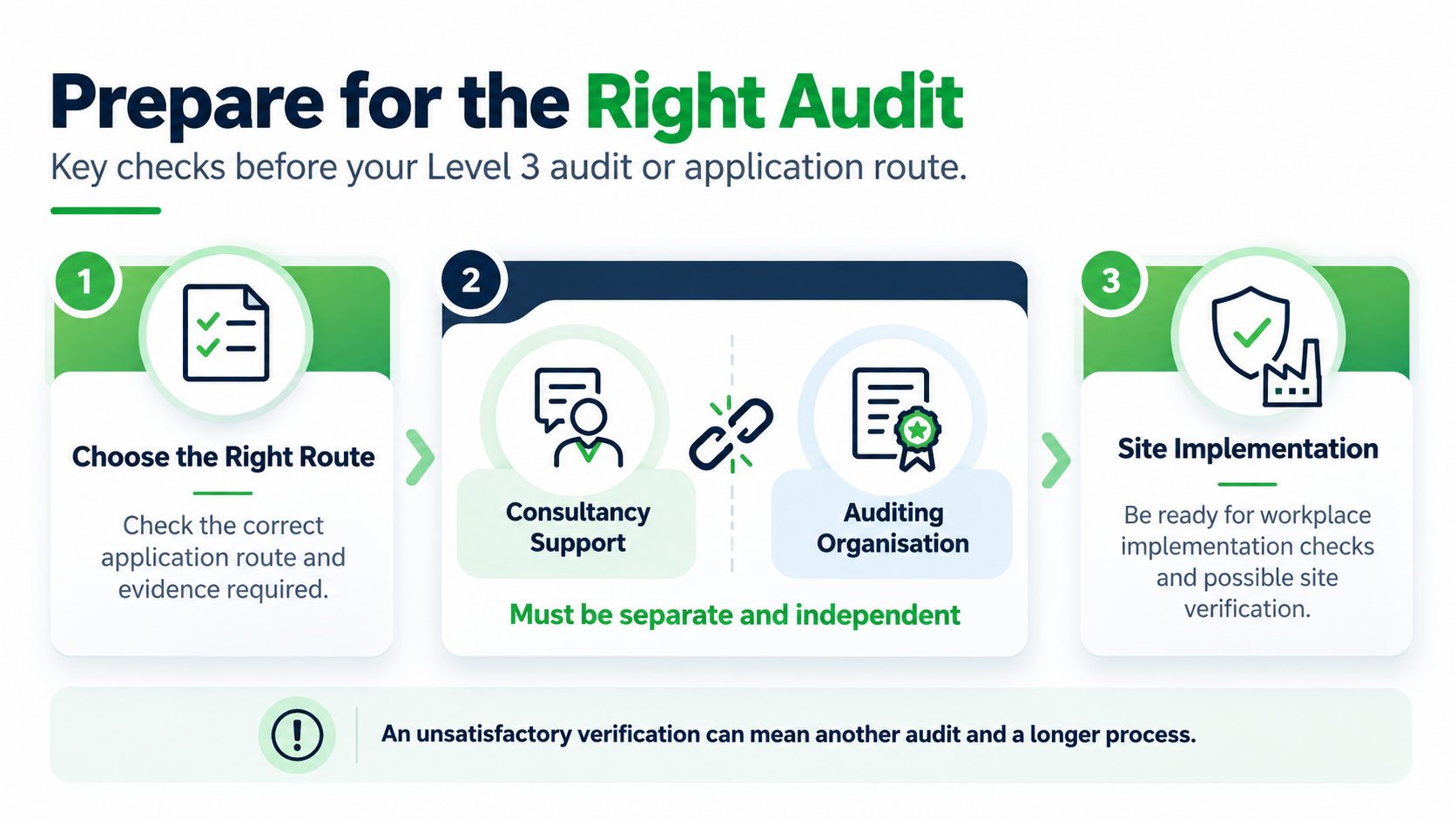
For companies using the usual Level 3 audit route, the assessment must be conducted by an Auditing Organisation registered with the Ministry of Manpower. Other accepted application routes have their own evidence requirements.
The Council requires the consultancy organisation and auditing organisation to be separate and independent. It also says consultancy and auditing must not be arranged as a package.
Check that the assessment covers implementation at the workplace. The Council may conduct additional site checks, and an unsatisfactory verification can mean another audit and a longer application process.
Check The 2026 Vehicle Requirements
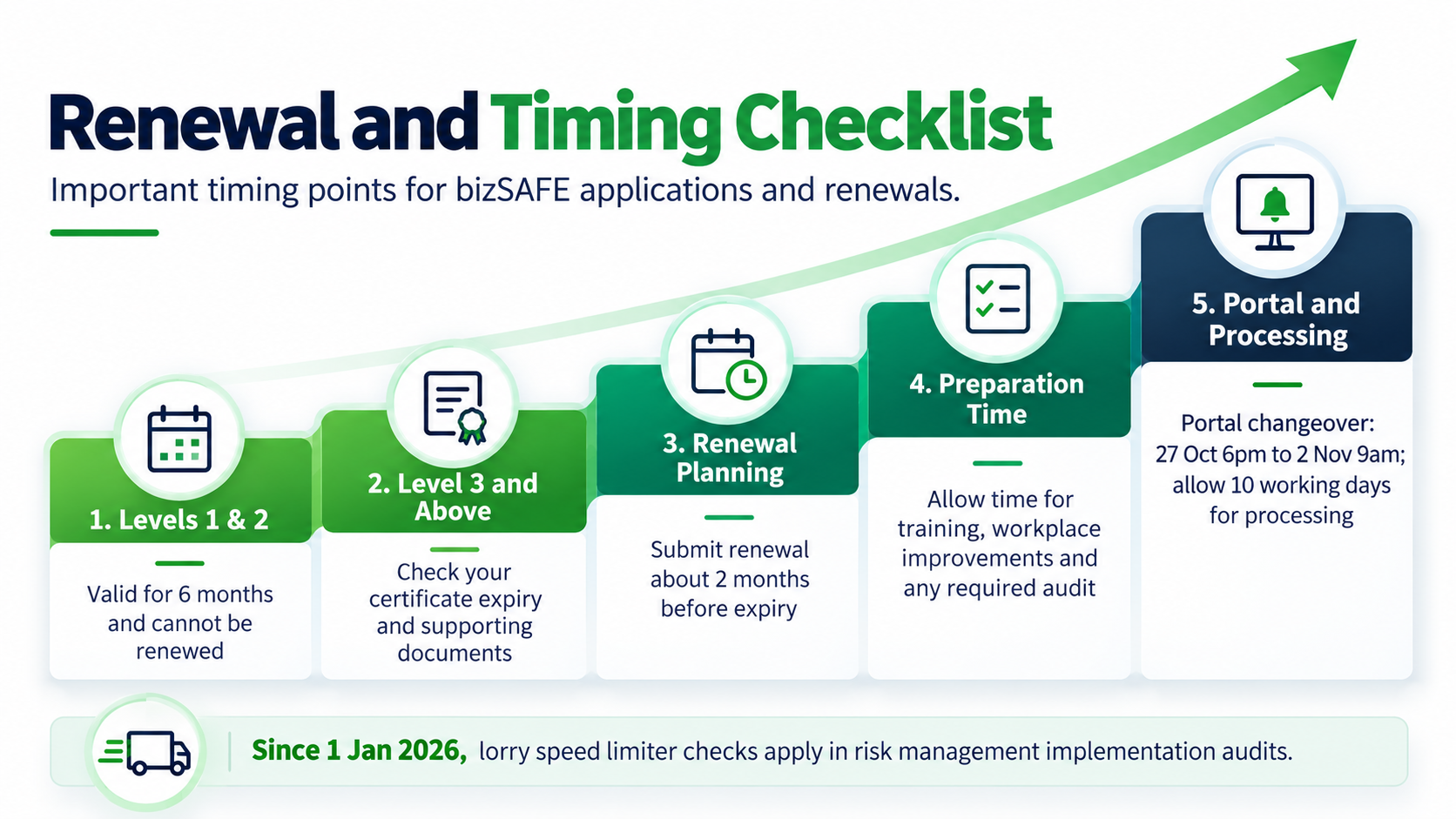
Since 1 January 2026, risk management implementation audits include checks on speed limiters in lorries.
Companies operating lorries should review the applicable requirements and the evidence needed for the audit. Confirm installation and relevant supporting records before the assessment. Include vehicle-related risks in the company's wider safety review.
Plan Renewal And Application Timing
Levels 1 and 2 are introductory stages. Their certificates last six months and cannot be renewed.
For Level 3 and above, check the expiry date on your certificate and the supporting documents. Validity depends on the application route and relevant external certifications.
The Council advises submitting renewal applications two months before expiry. Allow time for training, workplace improvements and any required audit. Applying for recognition is free, although training, consultancy and auditing can involve separate costs.
Note The Current Portal Changeover
The Council has announced that some online services will be temporarily unavailable from 6pm on 27 October until 9am on 2 November 2026, Singapore time, while it prepares its new portal.
Check the latest Council notice for the appropriate application route. The Council asks businesses to allow ten working days for processing. Further verification can extend this.
Prepare Your Next Steps With QuESH
QuESH Consultants provides bizSAFE support to help businesses strengthen their safety arrangements and prepare for the relevant requirements.
Discuss your current level, expiry date and operating changes with QuESH. Identify the documents and workplace practices needing attention, then agree practical actions your team can maintain.
Keep the required audit appointment independent and submit your company's application in line with the Council's guidance. Contact QuESH to discuss preparation for your first application, renewal or next bizSAFE level.
Sources:
MOM — Parliamentary reply on bizSAFE enterprises and the programme review, 7 October 2026
WSH Council — About bizSAFE and requirements for each level
WSH Council — Apply for bizSAFE and current portal notice
WSH Council — Frequently Asked Questions
WSH Council — Supporting documents to apply for bizSAFE
QuESH Training