The Straits Times reported in July 2026 that Singapore was tightening cybersecurity requirements for operators of critical services as AI-enabled attacks become faster and more scalable. The report highlighted stronger board accountability, wider threat detection and further requirements for cloud environments.
These measures show that cybersecurity is no longer only a technical matter. It is an operational and leadership responsibility.
What Is CII
In Singapore, CII supports essential services across 11 sectors: aviation, banking and finance, energy, government, healthcare, info-communications, land transport, maritime, media, security and emergency services, and water.
The mandatory CII requirements apply directly to designated CII owners, not automatically to every Singapore company. This distinction is important. An SME should not assume it is legally subject to the same obligations simply because it supplies a large organization.
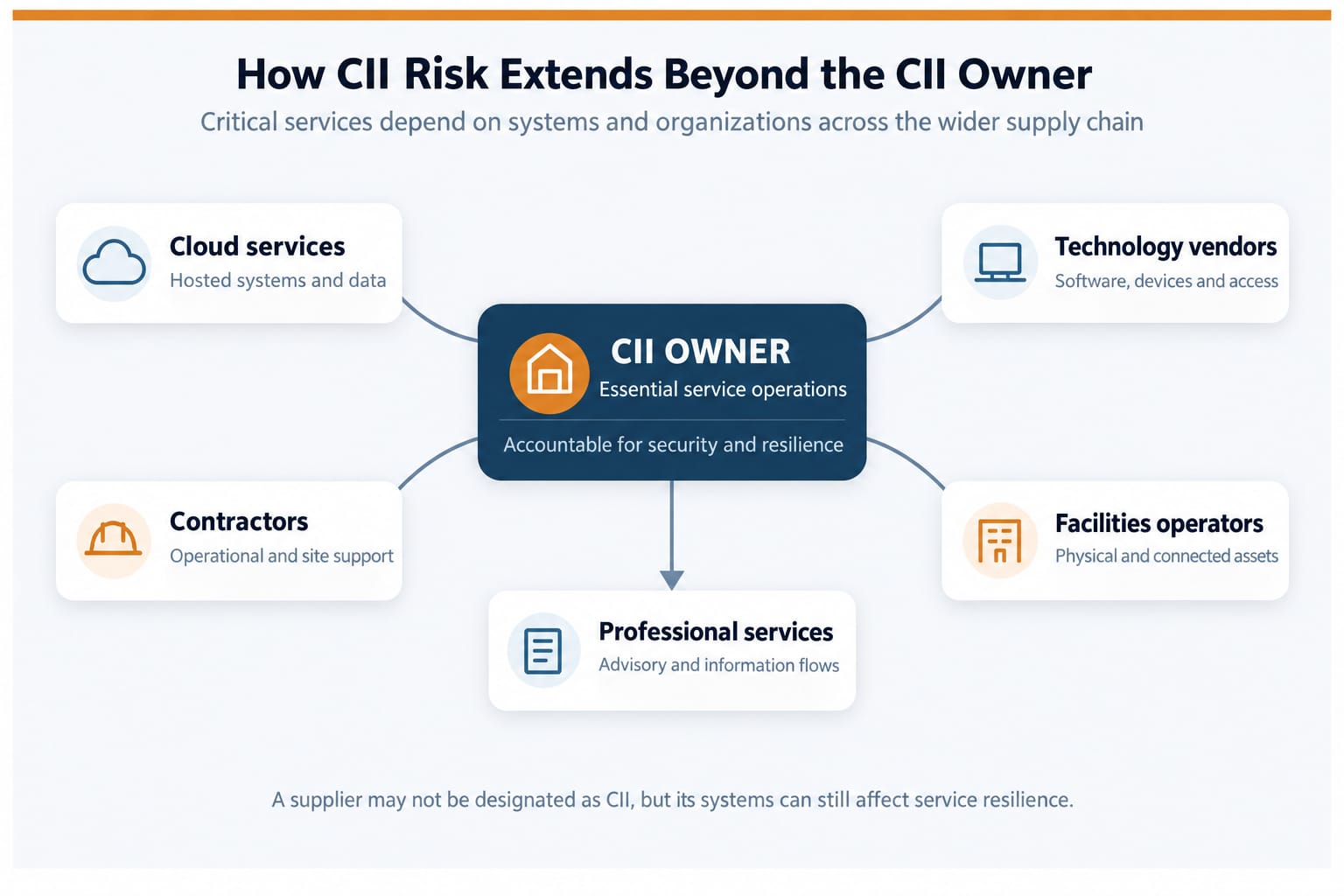
However, businesses outside these sectors should still pay attention. A technology provider, contractor, cloud partner, professional-services firm or facilities operator may connect to, process information for or support a CII owner. Its cybersecurity practices can therefore become part of the customer's risk assessment and procurement requirements.
What Has Changed
Singapore has raised the bar. The Cyber Security Agency of Singapore introduced the Cybersecurity Code of Practice for Critical Information Infrastructure 2026 on 29 July 2026, signalling stronger expectations on governance, visibility and resilience.
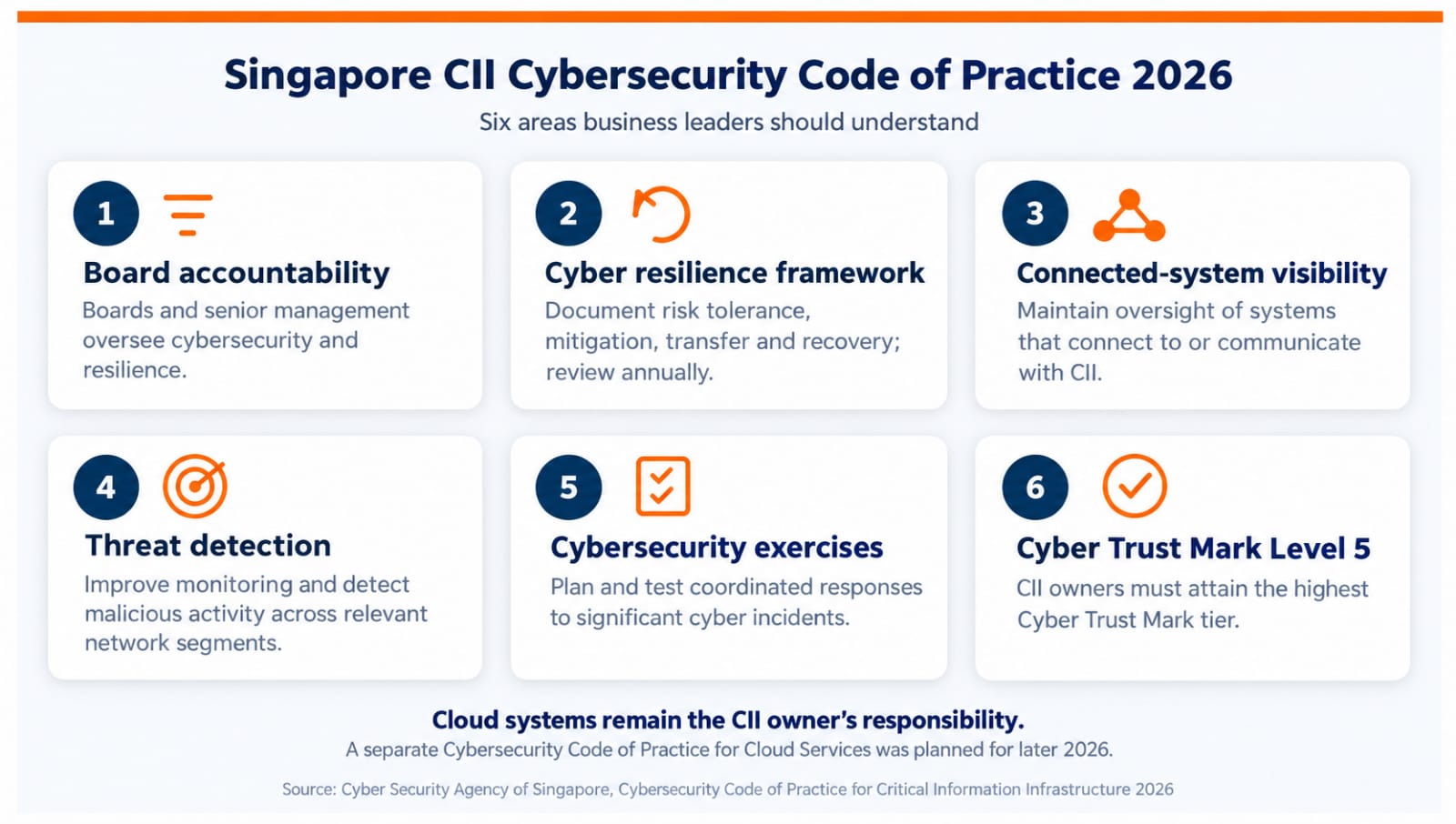
Key expectations include stronger board and senior-management oversight, a documented cyber-resilience framework reviewed at least annually, visibility over interconnected systems, improved network monitoring and threat detection, and comprehensive cybersecurity exercises.
CII owners must also attain Cyber Trust Mark Level 5. The Straits Times reported that they have until the end of 2027 to meet this certification requirement.
A separate legally binding code for CII systems hosted in the cloud is also planned. This reflects an important principle: accountability does not disappear when an external provider handles systems or data.
AI does not replace existing cybersecurity controls, but it shortens the response window. Attacks can be identified and executed faster, leaving organizations less time to detect and contain threats. This makes fundamentals — asset visibility, patching, access control and incident readiness — even more critical.
The Business Lesson
Singapore’s updated CII requirements send a clear message: cybersecurity is no longer an IT issue — it is a business risk that must be governed across leadership, operations and technology.
For most organizations, the immediate goal is not to copy every CII control. It is to identify which principles are proportionate and valuable, including clear accountability, asset visibility, tested recovery plans, secure vendor relationships, and evidence that controls are working.
If your organization supports critical sectors or is facing increasing cybersecurity expectations from customers, this is a good time to assess where you stand.
QuESH can support a practical, non-obligatory discussion to help translate these developments into clear priorities and next steps.
Speak with us TODAY for a complimentary cybersecurity-readiness discussion. We can help your organization prepare for relevant frameworks such as Cyber Trust Mark or ISO/IEC 27001.
“You may not be regulated — but your customers are.”