A rejected delivery, damaged stock or a service that needs repeating can cost more than the original mistake. Extra labor, replacement materials, transport and disposal can reduce margins while consuming additional resources.
For Singapore business owners and operations managers, these connected costs provide a practical reason to consider combining ISO 9001 and ISO 14001. An integrated management system can help teams address quality problems and environmental impacts through coordinated working practices.
The opportunity may be particularly relevant when employees maintain similar records for separate systems, receive overlapping instructions or investigate the same operational problem independently.
What Integration Means
ISO 9001 focuses on quality management, helping organizations meet customer requirements, deliver consistent products or services and improve performance. ISO 14001 focuses on environmental management, including environmental impacts, applicable legal requirements and other commitments, and environmental performance.
Both standards use a common structure that supports integration. Organizations can share processes for document control, training, internal audits and management review while addressing the specific requirements of each standard.
Integration should make responsibilities and working methods clearer. Employees should know which instructions to follow and who owns each process.
Where To Connect Everyday Work
Start with activities where quality problems and environmental impacts overlap. The following examples illustrate how shared processes can address both.
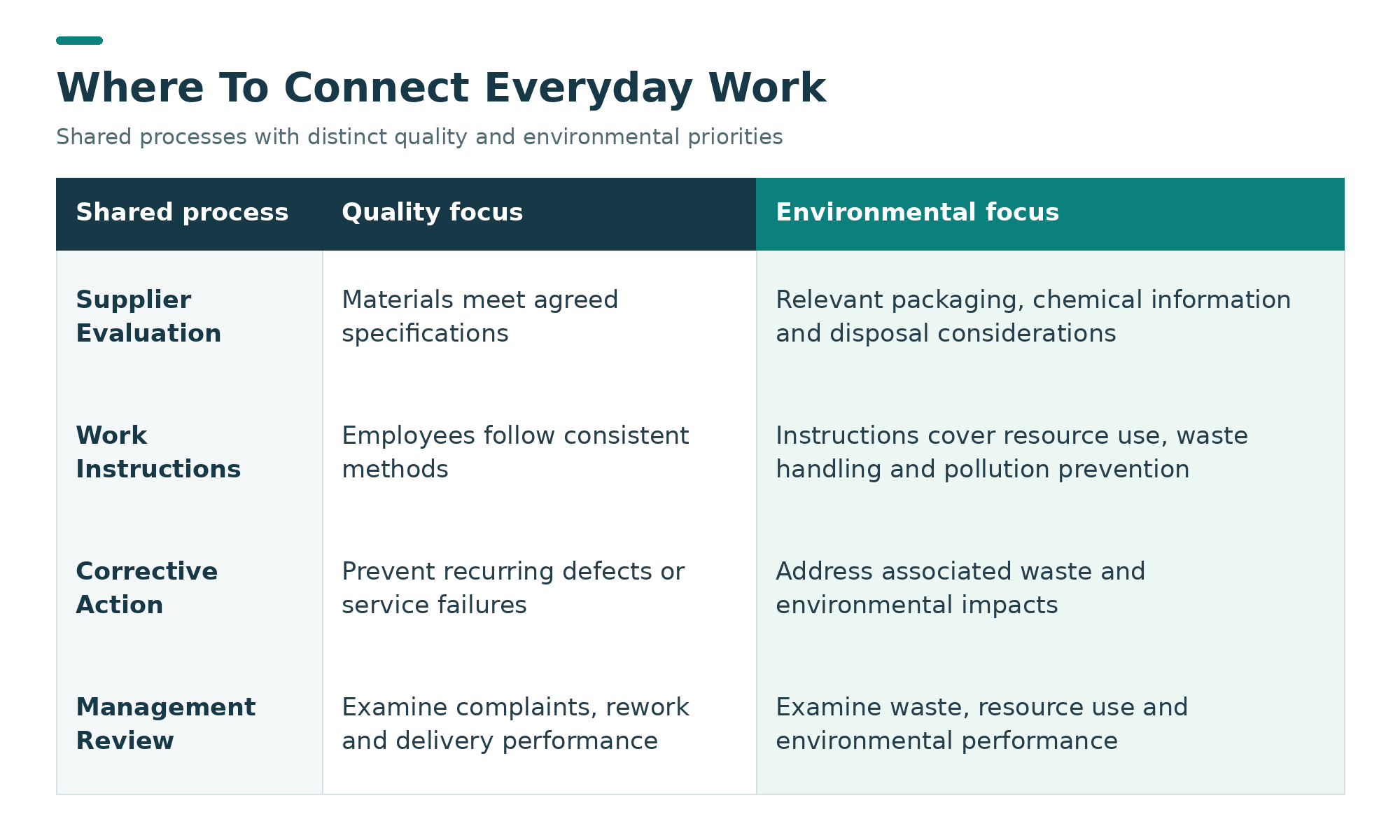
The potential business benefits include fewer repeat jobs, less unnecessary material use and less duplicated administration. Results depend on effective implementation and should be measured against an established baseline.
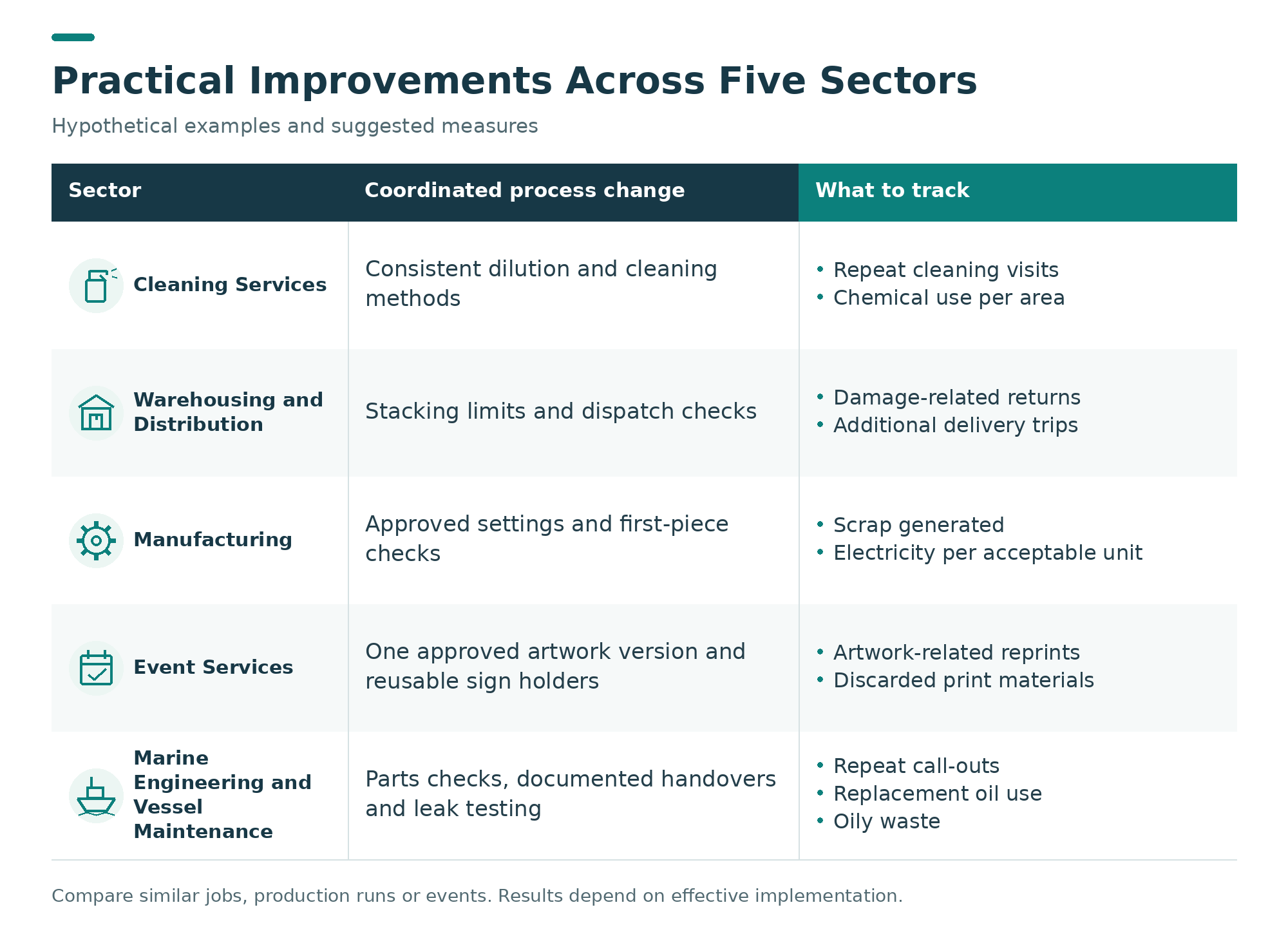
Practical Scenarios Across Five Sectors
The following scenarios are hypothetical examples of how integration could work in practice. The suggested indicators are measures to track, not claimed client results.
1. Cleaning Services
Consider a hypothetical Singapore cleaning company receiving complaints about streaks on floors while using more cleaning chemicals than expected.
An investigation identifies inconsistent dilution and cleaning methods. The company updates its instructions, trains employees and provides suitable measuring equipment.
Supervisors could then track:
Repeat cleaning visits per 100 completed jobs.
Chemical concentrate used per comparable area cleaned.
Monthly labor and transport costs associated with repeat visits.
These are suggested indicators, not claimed results. Comparisons should account for differences in floor surfaces, cleaning requirements and job conditions.
Fewer repeat visits would suggest improved service consistency. Lower unnecessary chemical use would suggest better resource control, provided the required cleaning results are maintained. The company should also check relevant wastewater, packaging and disposal impacts.
One operational correction can support both systems, with separate measures showing whether quality and environmental performance improve.
2. Warehousing And Distribution
A distributor repeatedly receives complaints about dented goods. Replacing damaged items creates waste and requires additional deliveries. A joint investigation links the damage to unsuitable stacking and inconsistent checks before dispatch. The business introduces clear stacking limits and a dispatch check, then trials returnable protective packaging where practical.
It tracks damage-related returns per 100 deliveries, the weight of discarded products and packaging, and extra delivery trips. Packaging changes should be tested against product protection and handling needs so that reducing packaging does not increase damage.
3. Manufacturing
A small manufacturer finds that different shifts use different machine settings. Rejected parts require rework or become scrap, consuming additional materials and electricity. Production and environmental staff review the same failure, agree approved settings and introduce a first-piece check before each batch.
The team monitors the proportion of parts accepted without rework, scrap kilograms and electricity per acceptable unit for comparable production runs. Customer specifications must still be met, and comparisons should account for changes in production volume and product mix.
4. Event Services
An event services company repeatedly reprints signs because suppliers receive outdated artwork. Late changes trigger urgent deliveries and leave unused printed materials. A shared approval process gives suppliers one confirmed version before production. Reusable sign holders allow inserts to change without replacing the whole display.
The team tracks artwork-related reprints, discarded print materials and urgent delivery trips across events of similar size. Client requirements and the practical arrangements for reuse should guide material choices.
5. Marine Engineering and Vessel Maintenance
A marine maintenance contractor repeatedly returns to vessels to fix leaks after pump servicing. A review finds that crews sometimes use incorrect replacement seals and handovers omit inspection results. The repeat work delays vessel handover, uses additional oil and creates oily waste.
The contractor introduces checks against approved parts specifications, a documented handover and leak testing before returning equipment to service. Updated instructions also cover spill containment and segregation of oily waste, alongside existing safety controls.
It tracks repeat call-outs per 100 servicing jobs, replacement oil use and oily waste per comparable job. These measures help assess service reliability and resource use while accounting for differences in equipment and repair scope.
Why Review Your System In 2026
ISO 14001:2026 was published on 15 April 2026, followed by ISO 9001:2026 on 16 September 2026. Both editions build on established frameworks.
ISO 9001:2026 strengthens attention to leadership, quality culture and the distinction between risks and opportunities. ISO 14001:2026 improves clarity and alignment with environmental priorities, including climate change, biodiversity and resource efficiency.
For organizations using both standards, this creates an opportunity to coordinate their review. Shared documentation, employee awareness and audit arrangements can be examined alongside the updates required by each standard.
Organizations certified to the 2015 editions should confirm applicable transition deadlines and assessment arrangements with their certification body. Coordinating this work with normal training, audits and management reviews may help avoid repeated revisions.
Discuss Your Next Step With QuESH Consultants
QuESH Consultants provides business management system support for ISO 9001 and ISO 14001, alongside internal audit services to support preparation for external assessment.
Whether you already use one standard or manage two separate systems, contact QuESH Consultants to discuss what can be shared, what needs specific attention and where implementation or transition support would help.
You are welcome to share a recurring issue, such as rework, damaged materials or repeated service visits, as a starting point for the discussion.