Why Cybersecurity Matters for Singapore Property Businesses
Property agencies and management businesses routinely move client records, payment instructions and building information across email, cloud platforms, e-signature tools and mobile devices. Salespersons also work remotely and coordinate with tenants, contractors and service providers. These practices keep transactions moving, but they increase the impact of compromised accounts, misdirected documents and unauthorized access.
A practical cybersecurity program should therefore fit daily property work, support Singapore's PDPA obligations and use CSA's Cyber Essentials as a structured foundation.
Protect information throughout the property journey
Management should map data from the first enquiry through viewing, due diligence, agreement, payment, handover and retention. This may include contact and identity records, income and bank information, tenancy details, access logs, photographs and correspondence.
The map should cover the CRM, email, cloud storage, e-signature service, managed devices and working copies. Each location needs a defined purpose, authorized users and retention period. Duplicate or unnecessary records should be removed, and sensitive details redacted before sharing where appropriate.
Secure people accounts and payments
Set clear rules for devices, messaging and storage. If personal devices are allowed, require supported software, screen locks, encryption and a way to remove business access. Use multi-factor authentication for email, cloud storage, CRM, e-signature and administrator accounts. Provide named accounts rather than shared passwords so activity can be reviewed and access can be withdrawn. A joiner, mover and leaver process should cover system permissions, shared folders, mailing lists, local files and physical access.
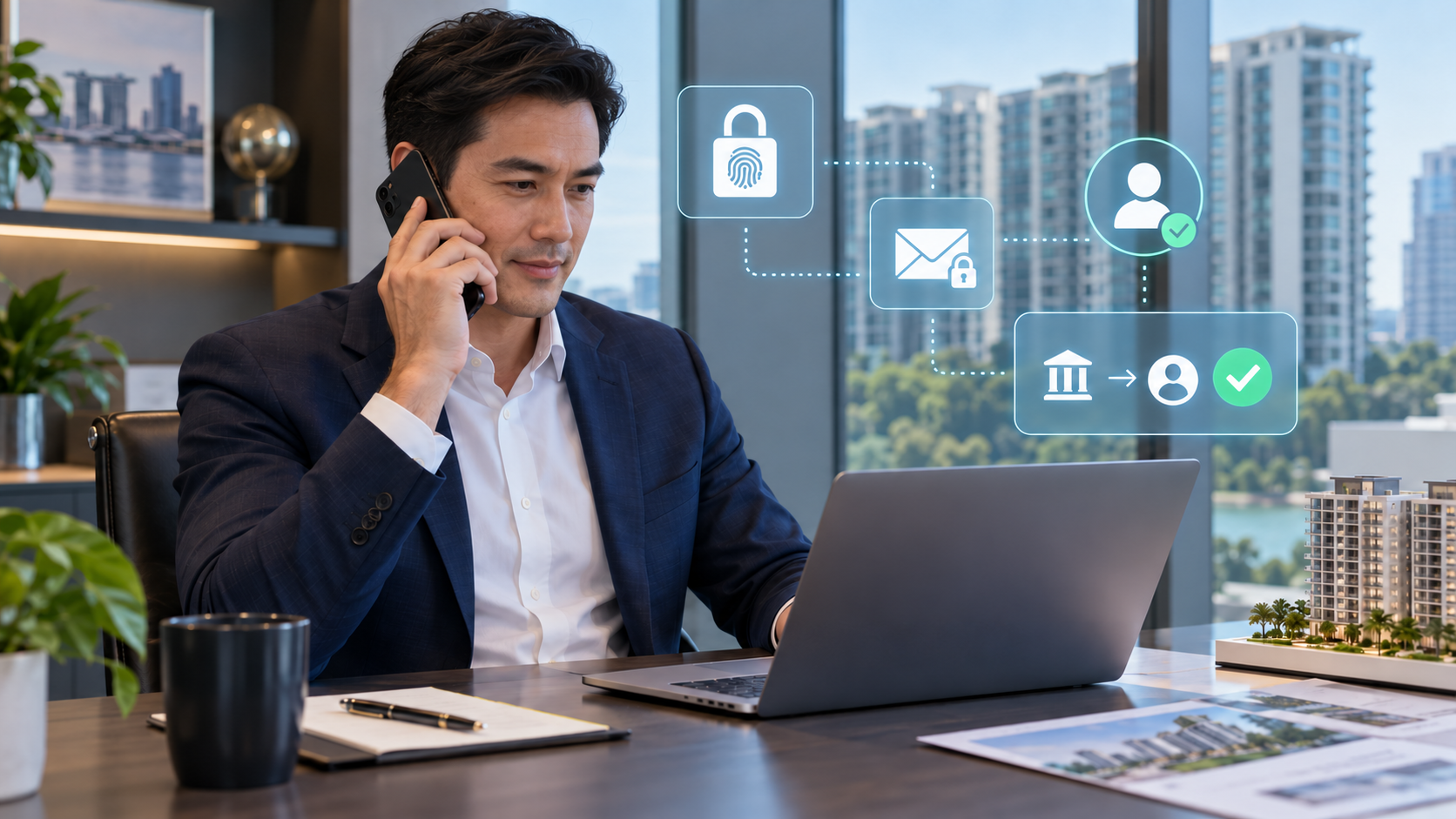
Property transactions can involve deposits, fees, refunds and contractor payments. Verify any request to change bank details through a trusted second channel, using a known telephone number or established contact rather than details in the same message. Approval levels should match value and risk. Unexpected urgency, unusual writing or attempts to bypass the normal process should trigger additional verification. Staff must never disclose authentication codes or password-reset links.
Secure Property Vendors, Connected Systems, and AI Tools
Before appointing CRM, storage, e-signature, maintenance or IT providers, review security settings, data handling, incident notification, backup, support and contract-exit arrangements. Agreements should clarify provider responsibilities and customer configurations. Contractor access should be limited by system, role and time.
Property managers should inventory connected technologies such as access control, CCTV and visitor systems. Change default credentials, restrict administrative privileges, review remote vendor connections and separate systems affecting physical operations where appropriate.
AI may help draft listings, summarize documents, answer customers and research markets. Use only approved tools and use cases. Do not enter identity documents, financial records, confidential agreements, or other personal data unless the organization has assessed and authorized the service. Human review remains necessary for accuracy, fairness, disclosure and decisions with contractual, financial or client consequences.
Choose proportionate assurance
Cyber Essentials addresses asset awareness, secure protection, updates, backups and response, including considerations for cloud, operational technology and AI. Organizations with more complex digital operations may consider Cyber Trust's risk-based approach. Certification is useful when it reflects implemented controls and supports client, partner or contractual expectations.
Management priorities for the next quarter
Management can start by:
• Map personal and transaction data across approved tools.
• Enable multi-factor authentication on priority accounts.
• Review employee, salesperson, and contractor access.
• Independently verify payment changes.
• Confirm backup and restoration arrangements.
• Exercise one account-compromise or data-breach scenario.
These measures improve resilience and responsible data handling without disrupting legitimate property work.
Support from QuESH
QuESH Consultants can support a short cybersecurity readiness discussion for property agencies and management businesses to identify priority operations and consider a suitable path toward Cyber Essentials, Cyber Trust or related data protection assurance.
Avail our complimentary 15-minute readiness discussion. Are you available this week or next?