If your business supports a government customer through software maintenance, cloud services or technical support, your staff may access systems and sensitive project information.
Cybersecurity readiness means demonstrating how you control access, protect information and restore services after disruption. Evidence that these measures work can help customers assess your organization’s suitability for important responsibilities.
Understand The Announced Requirement
On 14 October 2026, the Cyber Security Agency of Singapore (CSA) stated that GovTech will require government vendors managing critical systems and sensitive government data to meet Cyber Essentials and/or Cyber Trust Mark requirements by end-2027.
The announced scope concerns the critical systems and sensitive government data a vendor manages. Confirm applicability with the procuring agency through the relevant tender or contract documents.
Clarify the required certification mark, Cyber Trust tier where applicable, assessment scope and completion timeline. Your target scope and tier should reflect your risk profile and the customer’s stated requirements.
Identify The Appropriate Certification
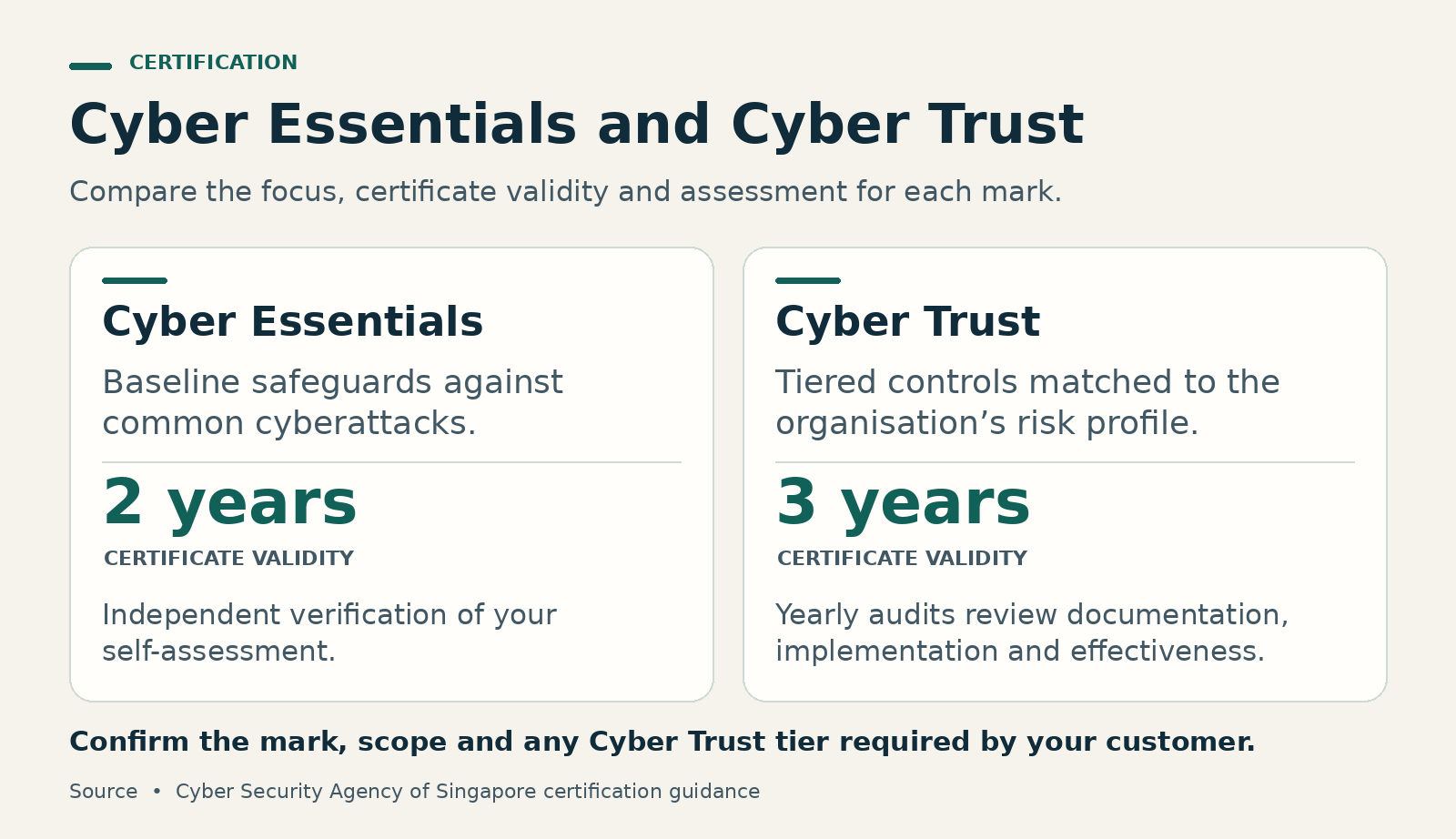
Cyber Essentials focuses on baseline safeguards against common cyberattacks. Cyber Trust uses a tiered, risk-based approach for organizations requiring more comprehensive cybersecurity measures.
Consider cloud services and outsourced operations supporting customer commitments when agreeing scope and assessment arrangements with a CSA-appointed certification body.
Review The Controls Behind Every Day Work
The following checks provide a practical starting point. They should be adapted to the relevant certification requirements, technology environment and customer obligations.
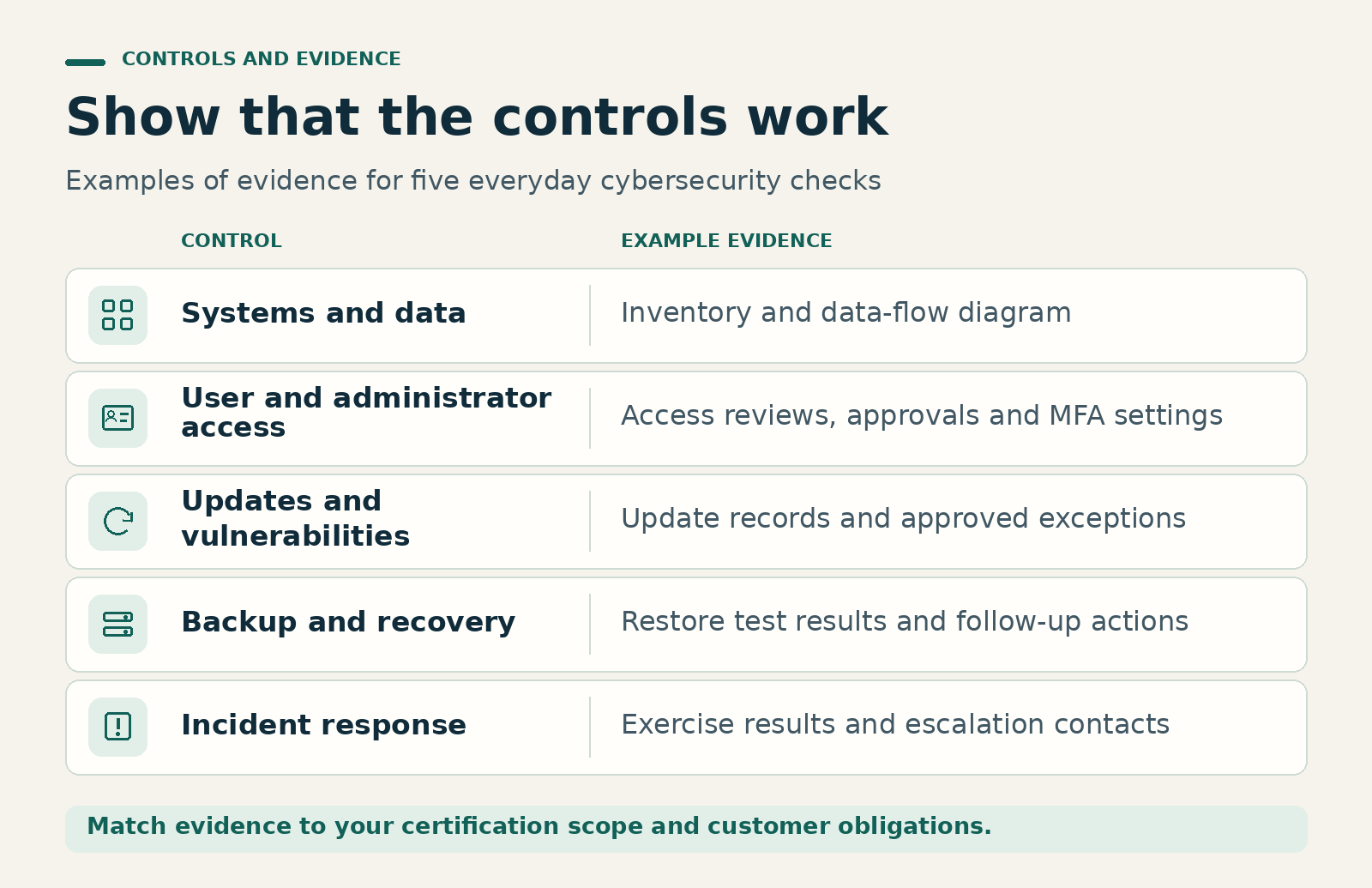
Know your systems and data. Maintain an inventory of devices, software, cloud services and important information. Identify their owners and how they support customer services.
For example, project files stored on employees’ laptops should be considered alongside information held in a central platform. An inventory and data-flow diagram can help reveal overlooked access points.
Control user and administrator access. Apply least privilege: give people only the access needed for their duties. Review administrator permissions, update access after role changes and revoke it when staff leave. Use multi-factor authentication (MFA), which combines two or more different types of identity verification.
Access reviews, approval records and authentication settings can demonstrate how these safeguards operate.
Manage updates and security vulnerabilities. Assign responsibility for software updates and prioritize weaknesses by their likelihood of exploitation and potential business impact. Record remediation actions and verify completion.
Where an update must be delayed, retain the approval, reason, interim safeguards, accountable owner and review date.
Protect and test recovery arrangements. Restrict access to backups, keep recovery copies securely separated from live systems and test restoration of important systems and information.
Test whether the team can restore usable information and resume an essential service. Record the results, compare them with agreed recovery needs and address weaknesses.
Prepare people to detect and respond. Train staff to recognize suspicious messages and report unusual activity. Define who monitors alerts, investigates incidents, contains their impact and communicates with management and customers.
Use a scenario exercise, such as a compromised support account, to check escalation and decision-making. Include relevant contractual notification obligations and keep contact details current.
Include Suppliers And Cloud Responsibilities
For cloud services, clarify the shared responsibility model: which security activities belong to the provider and which remain with your organization.
Review subcontractor access, security commitments, incident communications and recovery support. For example, confirm who administers cloud user accounts and who restores data. Record responsibilities in service agreements and retain relevant supplier reviews.
Turn Gaps Into A Preparation Plan
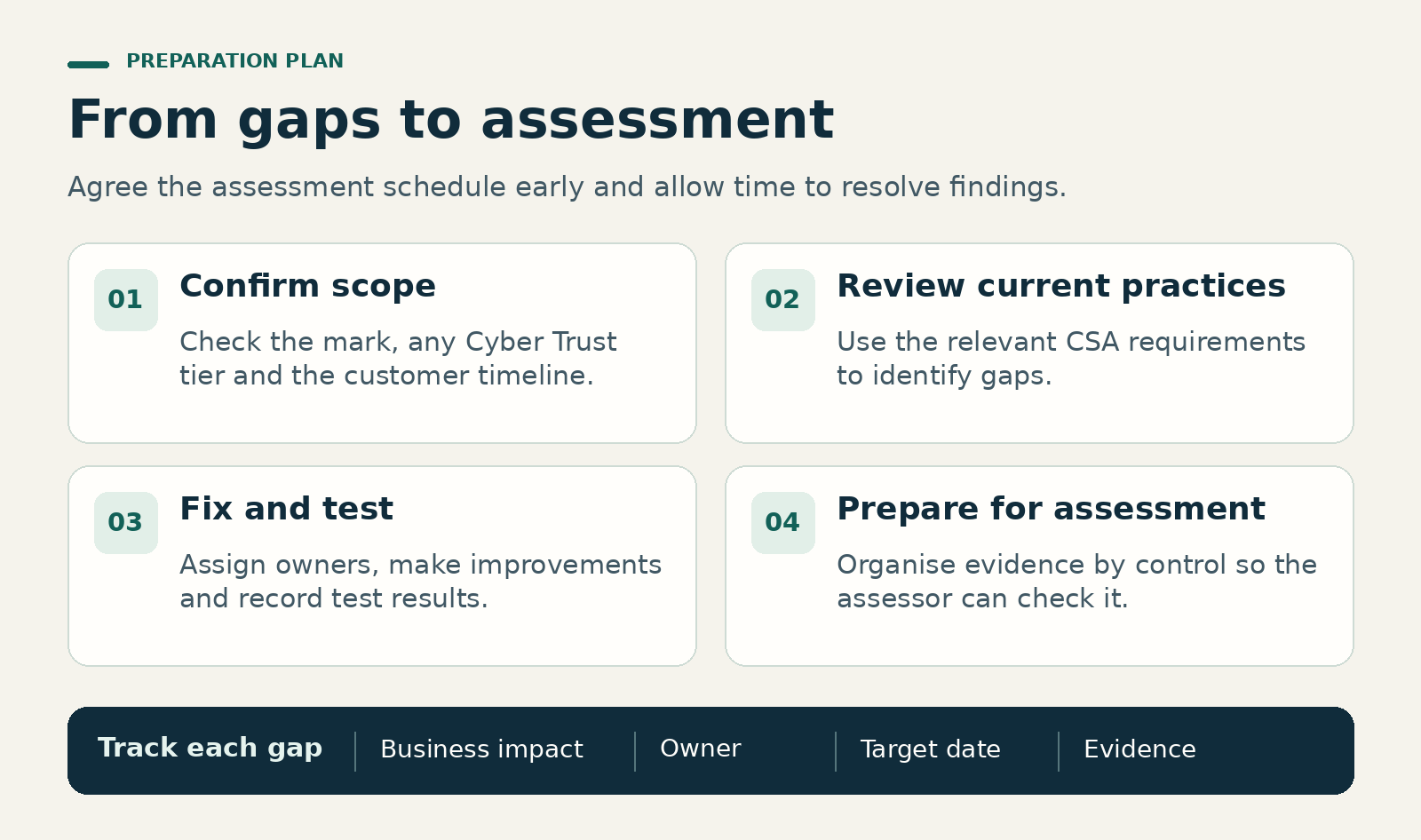
Compare current practices with CSA’s applicable certification documents and self-assessment materials. Create an action plan recording each gap, its business impact, responsible person, target date and supporting evidence.
Agree scope and an assessment schedule with your certification body early. Ensure management approves priorities and resources, and allow time for implementation, staff training, recovery testing and resolution of assessment findings.
Keep evidence current as systems, staff and services change. Readiness develops through consistent operation and regular review.
Prepare Your Business With QuESH Consultants
Meeting cybersecurity requirements involves more than obtaining a certification mark. Businesses need to establish appropriate policies, implement effective controls and maintain evidence that these measures are working.
QuESH Consultants supports organizations in strengthening their cybersecurity management practices through:
Cybersecurity Gap Assessment: Review existing practices against applicable Cyber Essentials or Cyber Trust requirements.
Documentation Development: Establish and improve cybersecurity policies, procedures and supporting documentation.
Implementation Support: Guide the implementation of relevant administrative and management controls.
Certification Readiness: Identify outstanding gaps and prepare organizations for independent certification assessment.
Whether you are responding to government tender requirements or strengthening your organization’s cybersecurity posture, QuESH can help you identify where you stand and develop a practical improvement plan.
Speak to QuESH Consultants to understand your cybersecurity readiness and the steps needed to meet your business and customer requirements.
____________________________________________________________________________________________________________
Sources verified:
CSA — SG Cyber Safe for Enterprises remarks, 14 October 2026
NIST — Multi-factor authentication definition
QuESH Consultants — Cyber Trust Mark readiness support