Consider a conference where the client has approved a revised floor plan, production is using the previous version, and catering has yesterday’s attendance figures. Each handover creates an opportunity for a small misunderstanding to become a visible service failure.
For companies in meetings, incentives, conventions and exhibitions (MICE), service consistency means carrying agreed requirements accurately from the first conversation through to delivery. ISO 9001 provides a framework for managing that work and learning from the results.
The stakes are significant in Singapore. The Singapore Tourism Board reported that MICE tourism receipts reached S$2.3 billion in 2025, up 35% from 2024. As businesses pursue opportunities in this market, dependable delivery deserves the same attention as a compelling event proposal.
What ISO 9001 means for an event business
ISO 9001 is the international standard for quality management systems (QMS). It helps organizations plan, control and improve processes to meet customer and applicable statutory and regulatory requirements. It applies to service businesses of any size, including event organizers, venues and event service providers.
Certification is optional and provides an independent assessment of the management system. The practical value comes from how teams apply it. The following controls are suggested ways to translate quality management into everyday event operations.
Agree what success means before committing
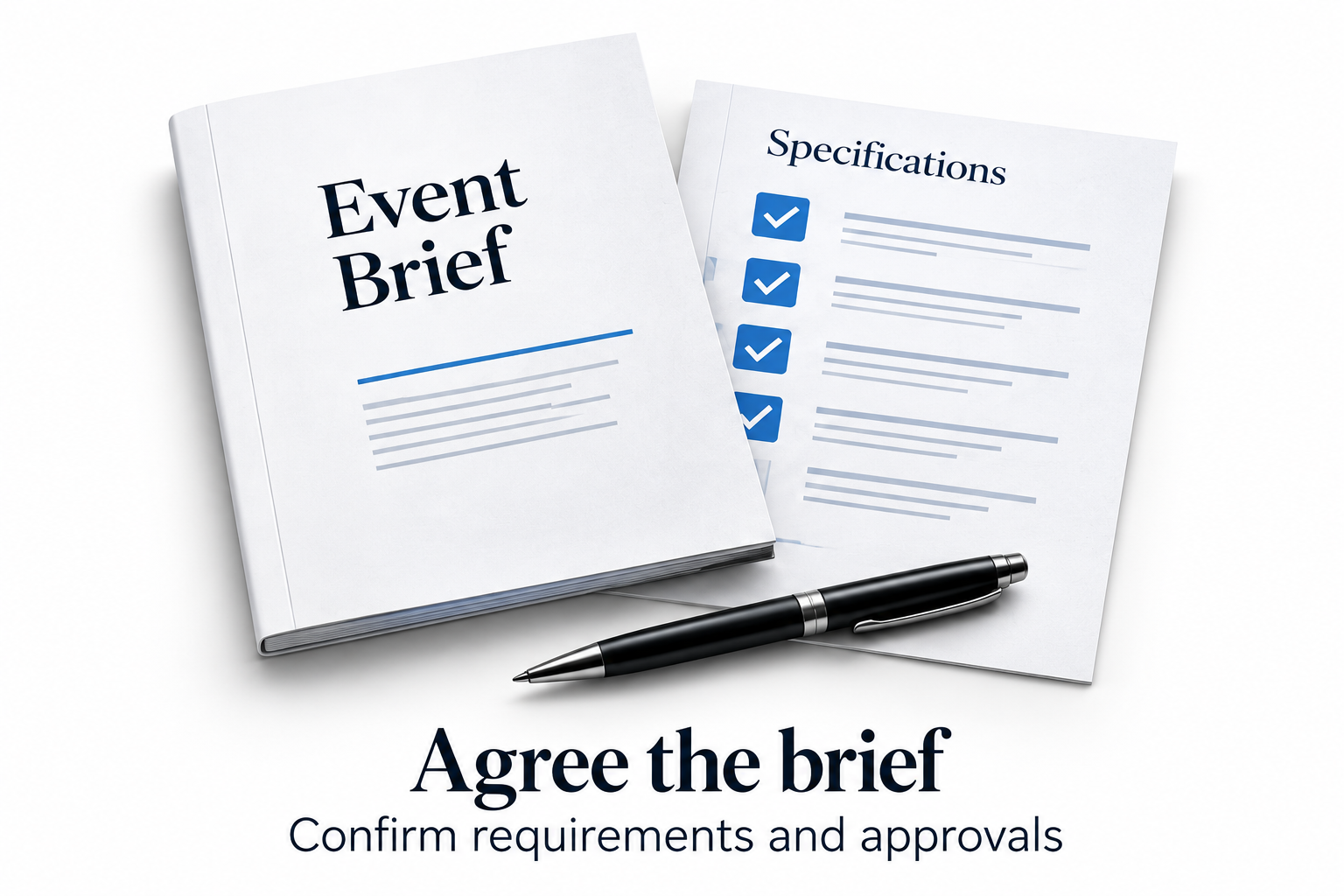
A useful event brief should capture the client’s objectives, intended audience, deliverables, budget boundaries and approval responsibilities. Confirm what your company is responsible for, including arrangements handled by subcontractors.
Make expectations measurable where possible. If the client asks for “smooth registration,” agree an acceptable waiting time and how it will be checked. For an exhibition build, clarify the approved specifications and completion deadline.
Review whether your team and suppliers can meet these commitments before accepting the work. Resolve assumptions early, and confirm important decisions with the client.
Connect every handover to the approved brief
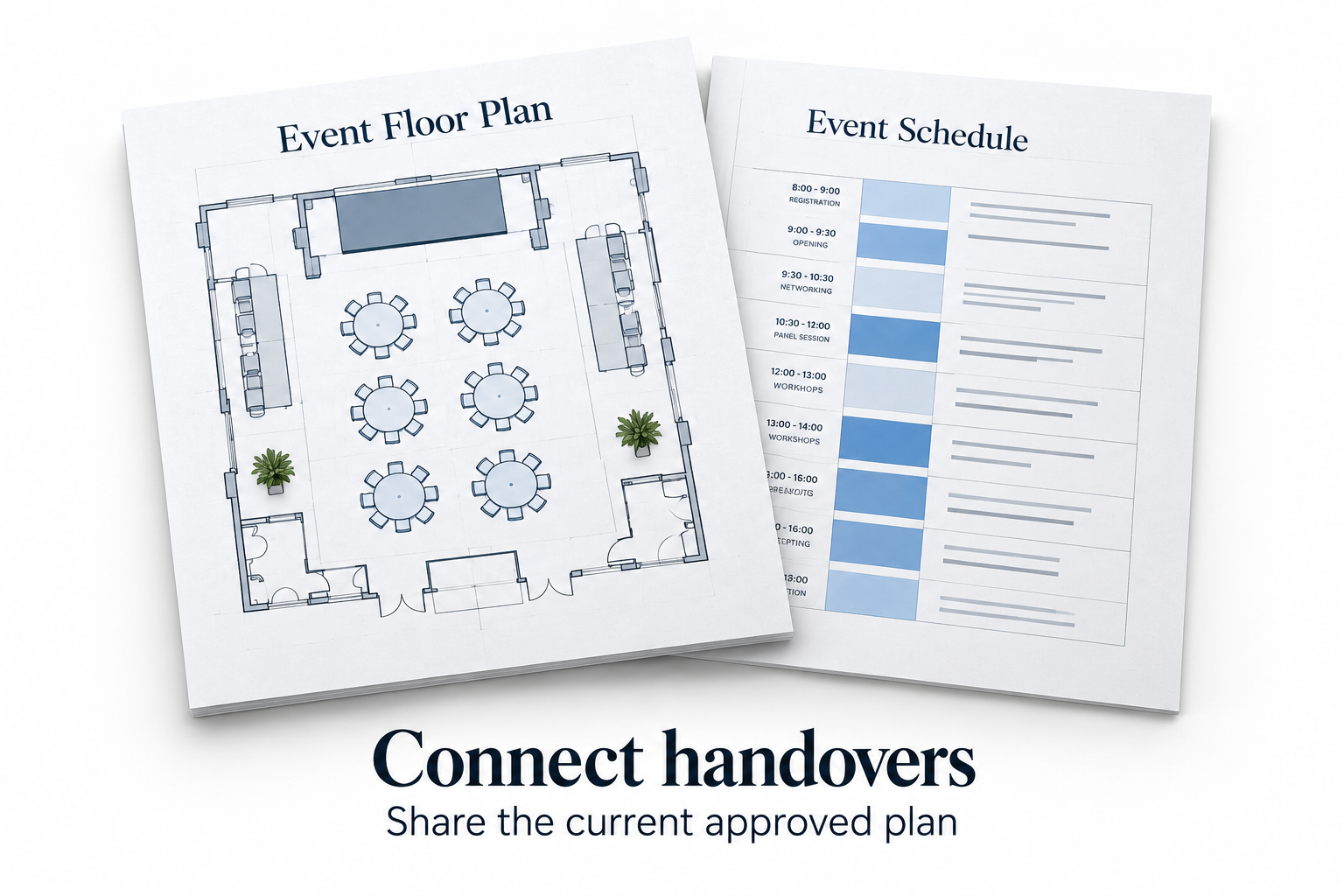
Event delivery moves between sales, creative teams, procurement, venue representatives and operations. Map these connections so each team knows what it must receive, what it must produce and who accepts the handover.
For example, issue build instructions after the layout has received the necessary approval. Give production and venue teams access to the same current plan. Keep the approved brief, event schedule and key contacts accessible to the people using them.
These controls should preserve room for creative decisions while making the transfer of information dependable.
Manage suppliers against clear service expectations
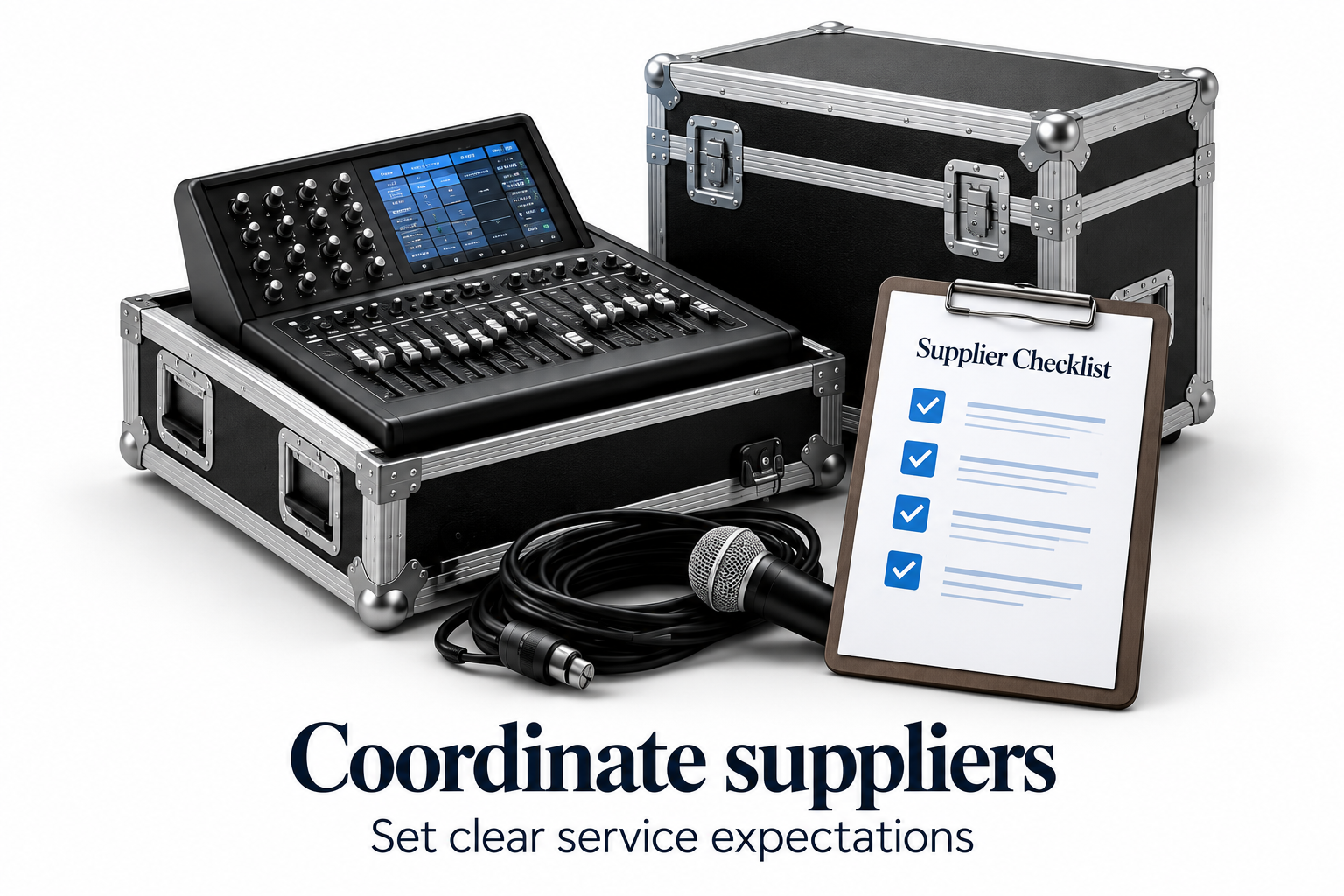
A delegate experiences the combined work of the organizer, venue and suppliers. Evaluate critical providers using criteria relevant to the assignment, such as capability, capacity, reliability and performance on comparable work.
Specify what acceptable delivery looks like. An audiovisual brief might cover equipment, testing times and technician availability. A transport brief might define pickup locations, scheduling and escalation contacts.
Match the checks to the consequences of failure. A supplier supporting the opening session may need closer coordination than one delivering materials several days beforehand. Record performance after the event and use it when making future selections.
Make changes traceable
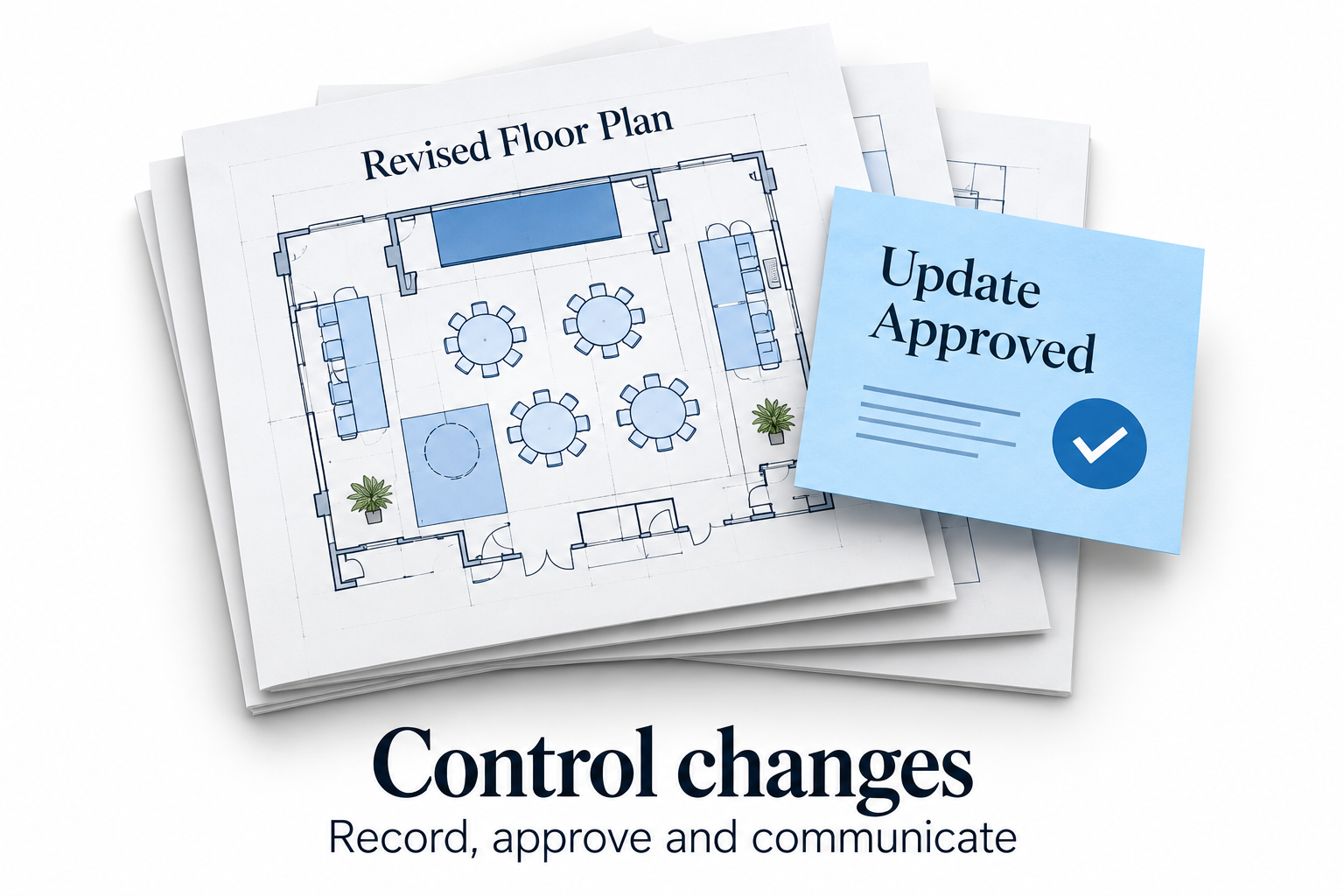
Late changes can affect several teams at once. Adding a breakout session may alter staffing, room arrangements, equipment and cost.
Agree who can approve changes and how their effects will be reviewed. Record the decision, update the relevant instructions, and confirm that affected teams have received the revision. Make superseded versions clearly identifiable so they are not used accidentally.
Keep the process proportionate to the decision. Teams need a quick, understood route for urgent changes, with clear authority to act and an accurate record of what was agreed.
Prepare people for live delivery
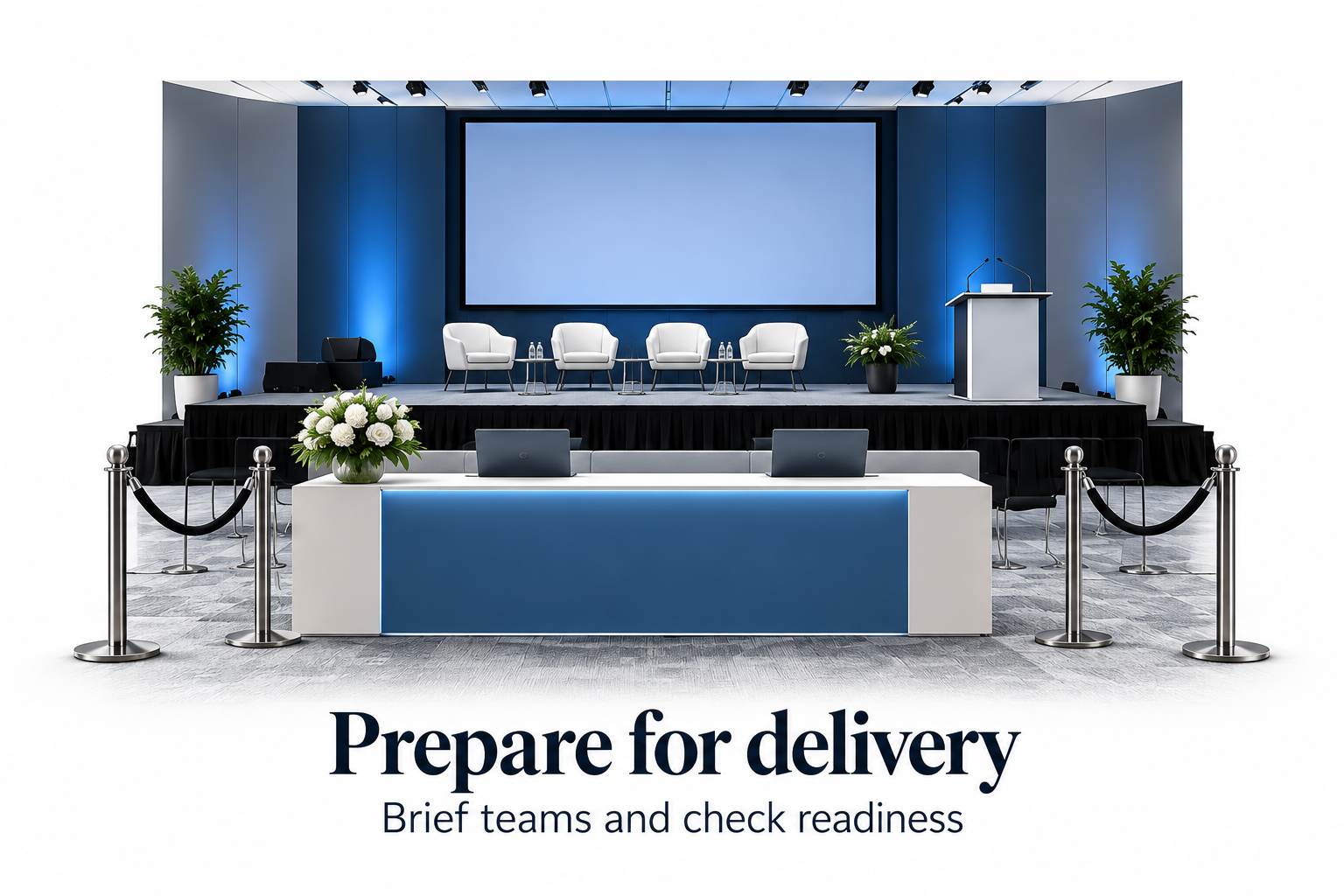
A clear plan needs people who can use it under pressure. Brief permanent staff, temporary crews and relevant suppliers on their roles, the current event schedule and the route for reporting problems.
Before guests arrive, check the critical points appropriate to the event, such as registration readiness, room setup and sound testing. Where a disruption would materially affect the client’s requirements, agree a workable response and identify who can activate it.
Make reporting problems easy. A crew member who spots a mismatch should know whom to contact and what action they are authorized to take.
Turn event results into better decisions
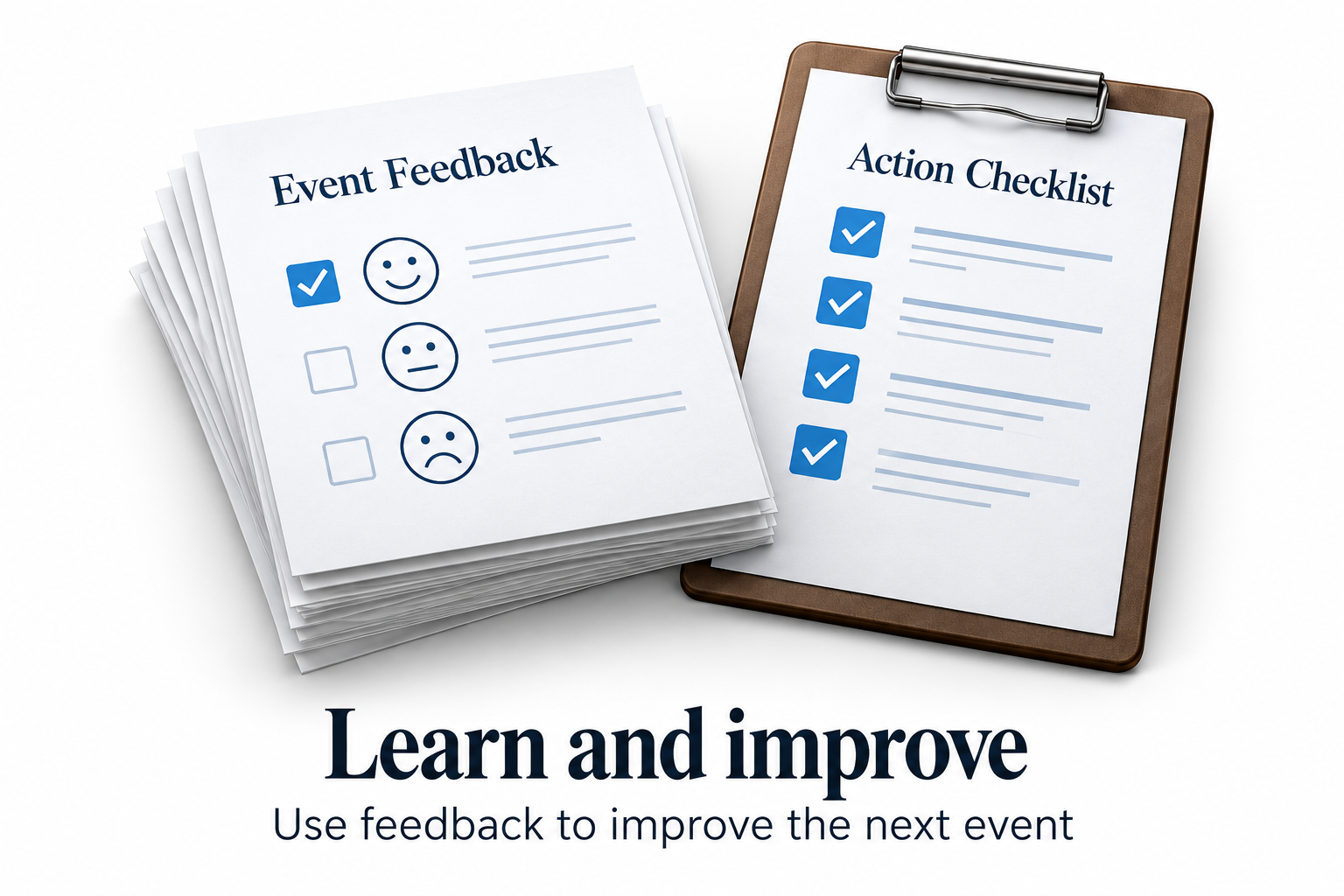
After the event, compare delivery with the agreed brief. Combine client feedback with operational evidence, rather than relying only on whether the event felt successful.
Useful measures might include registration waiting times, delivery against agreed milestones, recurring supplier issues and complaint resolution times. Define each measure consistently so comparisons between events are meaningful.
When something goes wrong, address the immediate issue and investigate why it happened. If a team used an outdated layout, check how approvals, document updates and handovers were managed. Assign a corrective action, a responsible person and a completion date, then check whether the change works at subsequent events.
Managers should use these findings to decide where training, resources or process changes are needed. Improvement becomes useful when lessons from one event change how the next is delivered
Apply the current edition
ISO 9001:2026 was published on 16 September 2026. It retains the established quality management framework while strengthening emphasis on leadership, quality culture and ethical behavior, and clarifying the treatment of risks and opportunities. For MICE leaders, this reinforces the importance of realistic commitments and an environment where people can raise delivery concerns early.
Under Global ACI’s published transition requirements, organizations with accredited ISO 9001:2015 certification have until 30 September 2029 to complete their transition. Agree the assessment schedule and necessary updates with your certification body.
Start with a real event
Trace one recent project from inquiry to final review. Identify where requirements became unclear, information arrived late or the same issue resurfaced. Use those findings to improve the relevant processes, then test the changes on upcoming events. Internal audits can help check whether the agreed controls are being followed and producing useful results.
The client should be able to recognize the event they approved in the event your team delivers. ISO 9001 helps companies organize the work needed to make that connection more dependable.
QuESH Consultants provides ISO 9001 quality management system consultancy. To explore how this approach could support your MICE business, speak with our team about your current event processes and service priorities.