A risk assessment may be completed. A method statement may be approved. But do those controls still reflect how the work is actually being carried out?
For specialist contractors, conditions can change between projects and during the same workday. A different site layout, equipment arrangement, subcontractor, or work sequence may introduce risks that were not present when the documents were prepared.
For organizations considering ISO 45001 for Singapore contractors, the objective is not to create more paperwork. It is to keep safety controls relevant, connected, and consistently implemented.
Why Safety Documents Can Become Disconnected from Site Operations
Specialist contractors work across engineering, installation, maintenance, structural, industrial and other project-based activities. Their risks vary, but changing sites, non-routine work, multiple contractors and different client requirements are common challenges.
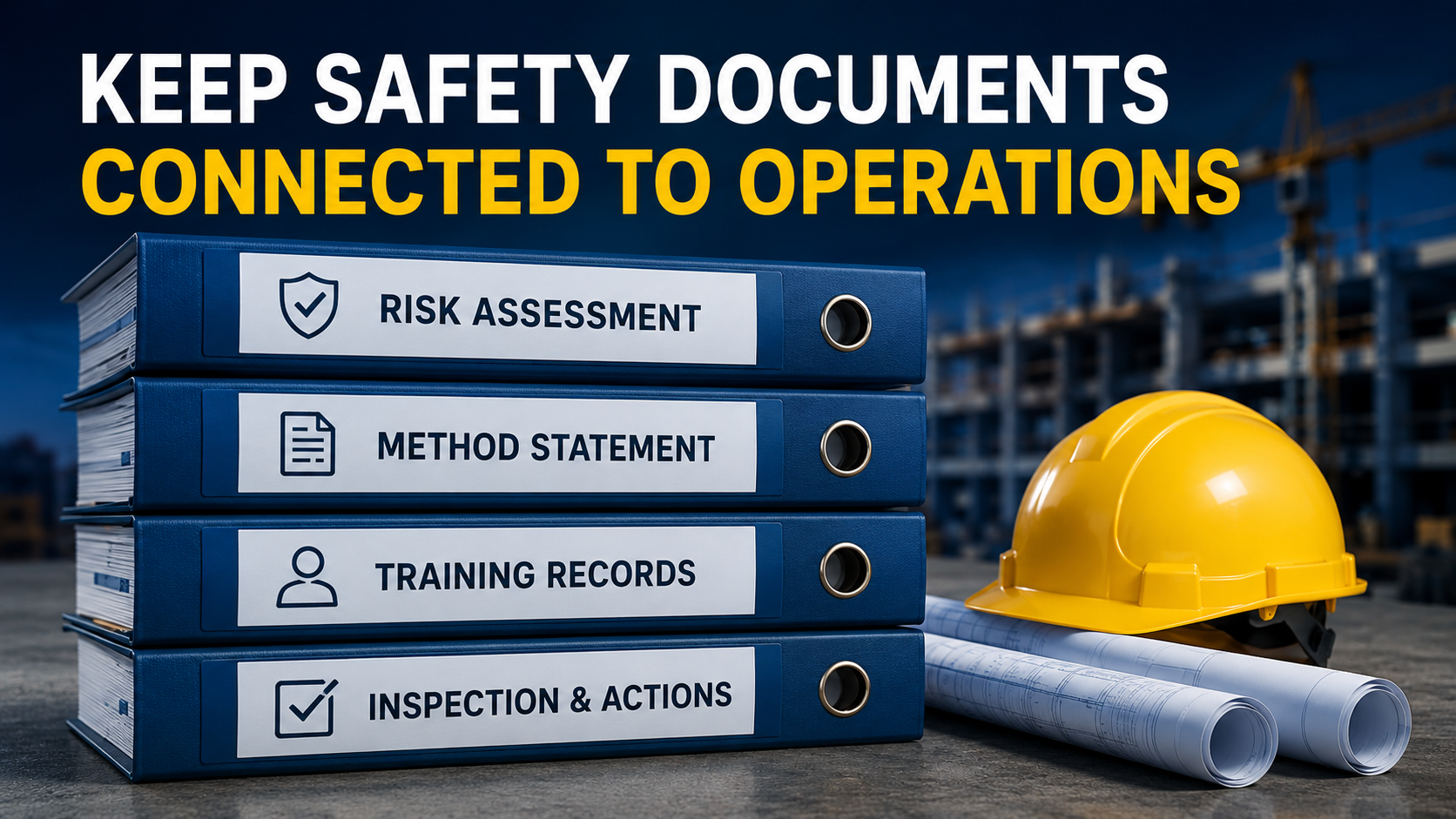
Most contractors already maintain risk assessments, method statements, training records and inspection documents. A review may be needed when:
• Risk assessments are reused without sufficient site-specific evaluation.
• Method statements do not reflect the latest work sequence.
• Subcontractors are not evaluated through a defined process.
• Inspection findings and corrective actions are not tracked to completion.
These gaps do not necessarily indicate a lack of safety commitment. They can develop when project demands and team arrangements change faster than internal processes.
What ISO 45001 Helps Contractors Manage
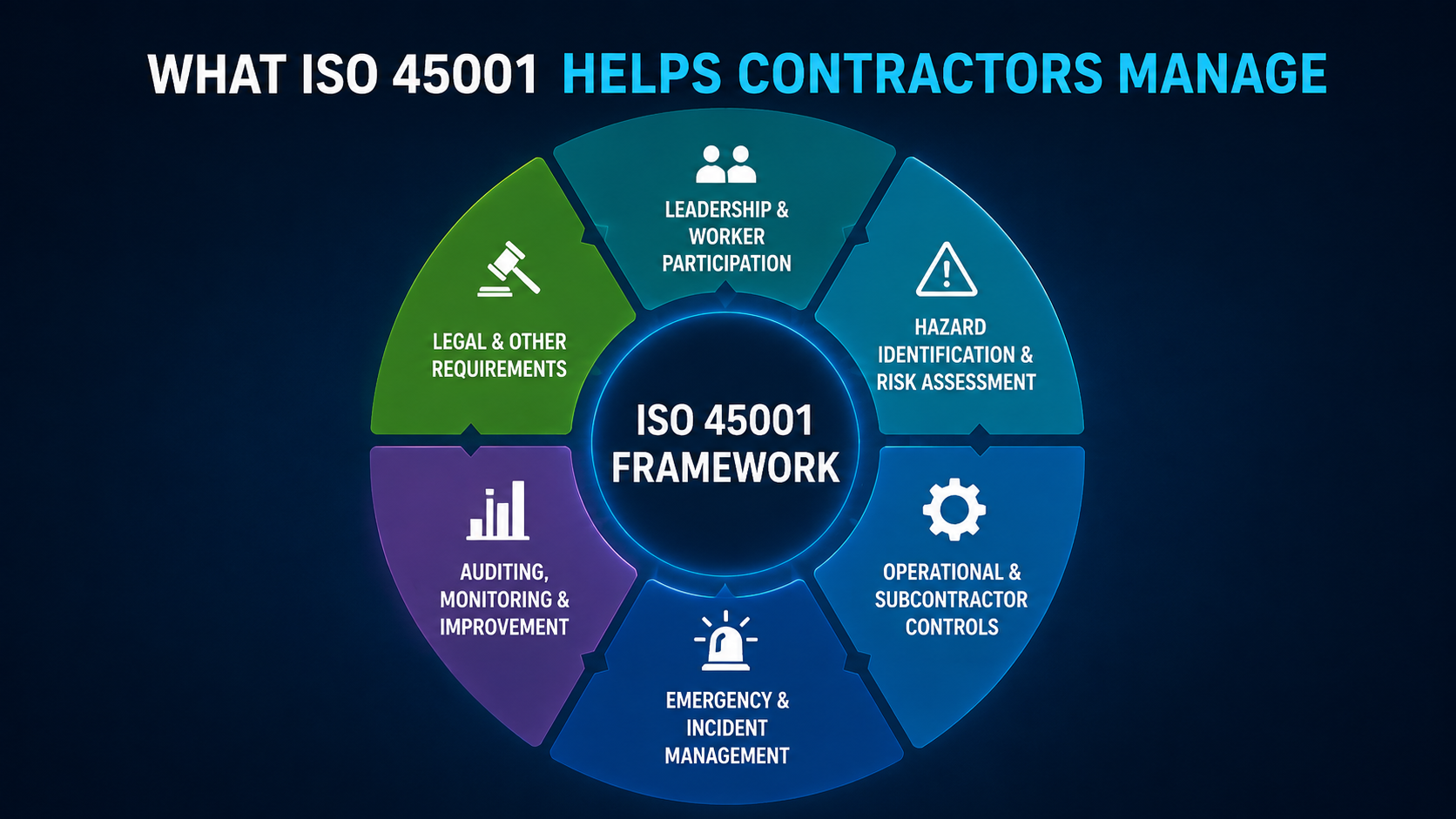
ISO 45001:2018 is the international standard for occupational health and safety management systems. It provides a framework covering:
• Leadership and worker participation
• Hazard identification and risk assessment
• Applicable legal and other requirements
• Operational and subcontractor controls
• Emergency and incident management
• Auditing, monitoring and continual improvement
ISO 45001 certification is generally voluntary. However, Singapore workplace safety and health responsibilities apply whether or not an organization is certified.
The Ministry of Manpower states that employers, self-employed persons and principals—including contractors and subcontractors—are responsible for identifying hazards and taking steps to eliminate or reduce workplace risks. This includes assessing, controlling, monitoring and communicating risks. Read MOM’s risk-management guidance.
ISO 45001 does not replace legal compliance. It helps an organization establish a systematic process for identifying and addressing applicable requirements.
Four Areas Specialist Contractors Can Strengthen
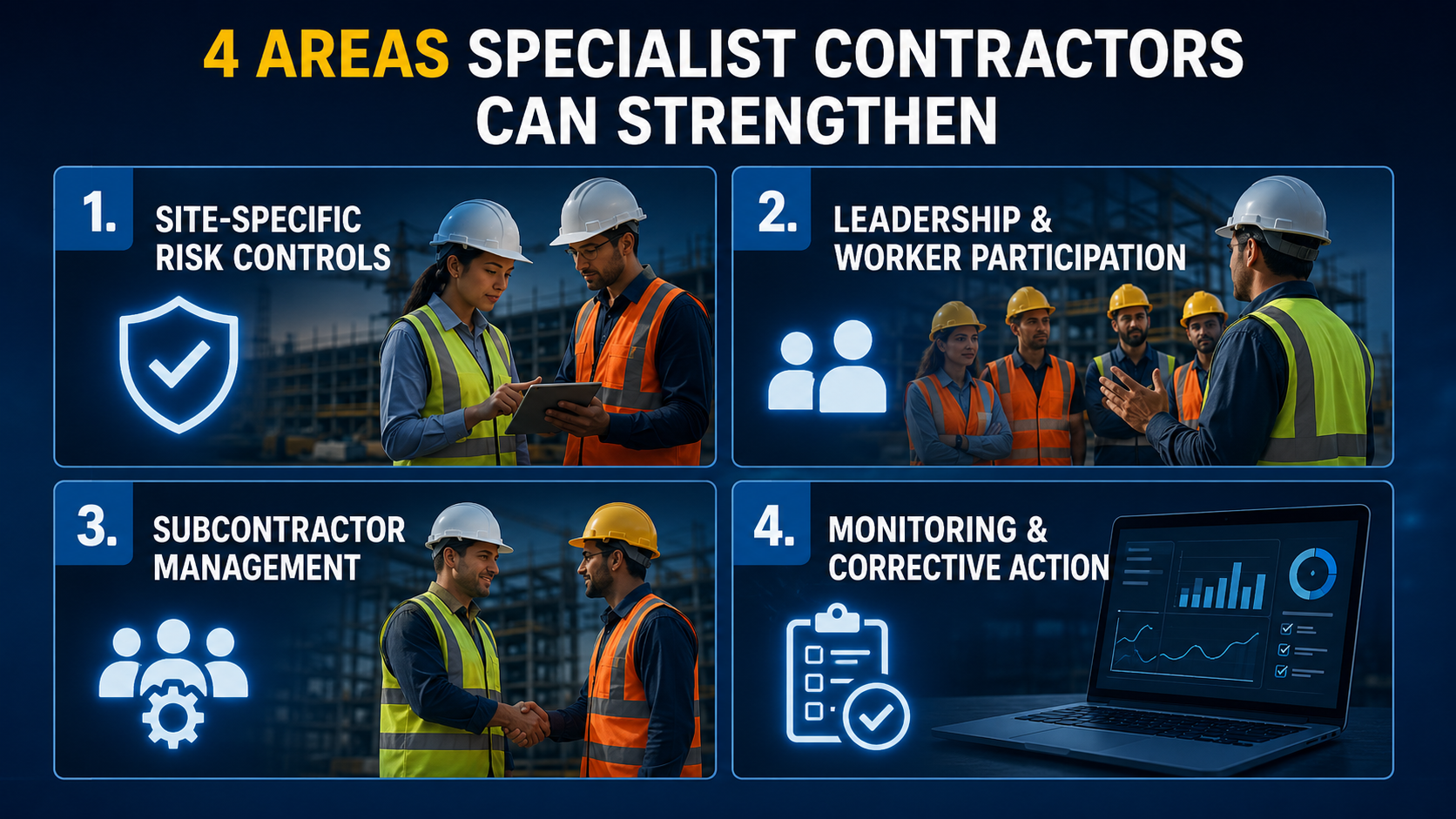
1. Site-Specific Risk Controls
A risk assessment is most useful when it reflects the actual work method, equipment, people and site conditions.
When an activity or work sequence changes, the organization should determine whether the risk assessment, method statement and controls also need to change. The same attention is needed for non-routine work such as troubleshooting, repair, testing and commissioning.
The goal is to keep documents connected to current operations—not simply to demonstrate that a document exists.
2. Leadership and Worker Participation
Safety should not sit entirely with a WSH coordinator or project safety representative.
Management decisions affect staffing, equipment, training, subcontractor appointments and project schedules. Leaders need reliable information about significant risks and unresolved actions so they can provide appropriate resources.
Workers also need a practical way to raise concerns. Toolbox meetings, pre-work briefings and near-miss discussions are more valuable when reported issues are reviewed and acted upon.
3. Subcontractor Management
Specialist projects may involve subcontractors, suppliers and service providers. Contractors should define how these parties are selected, briefed, monitored and reviewed.
Depending on the work, controls may include:
• Verifying training and competency
• Reviewing risk assessments and method statements
• Coordinating simultaneous activities
• Conducting site inductions and inspections
• Defining incident-reporting responsibilities
A subcontractor’s documents should not be accepted solely because they appear complete. The organization should check whether the controls are suitable and being followed.
4. Monitoring and Corrective Action
Safety management should go beyond recording incidents or inspection findings.
Organizations should examine why an issue occurred, whether similar conditions exist elsewhere, and what action is needed. Corrective actions should have an owner, target date, and completion record.
Their effectiveness should also be verified to confirm that the underlying problem has been addressed.
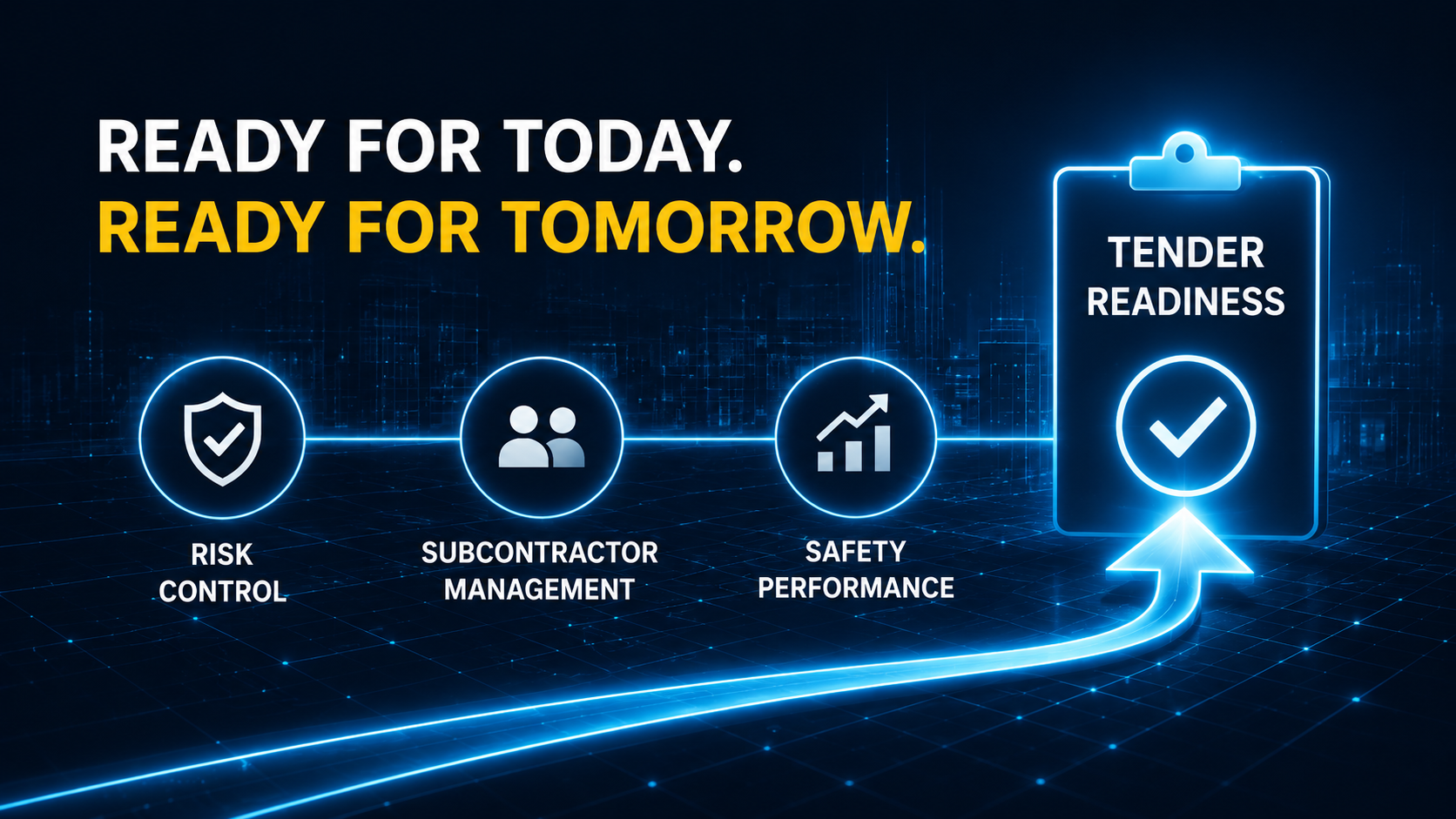
How Stronger WSH Controls Support Tender Readiness
Safety performance can influence how clients and main contractors evaluate potential suppliers.
For Singapore public-sector construction and construction-related projects above S$1 million, safety-related tender criteria carry a minimum weightage of 5%. Contractors may also need to demonstrate training, risk-assessment controls, performance reporting, and compliance with method statements. Review MOM’s public-sector construction requirements.
ISO 45001 certification does not guarantee that a company will win a contract. Tender and vendor requirements differ.
A functioning system can make it easier to provide consistent evidence during prequalification, tender submissions, and client audits, including:
• Current risk assessments and method statements
• Training and competency records
• Subcontractor evaluations
• Inspection and corrective-action records
• Safety-performance and management-review records
The commercial value comes from having evidence that is current and supported by actual implementation.
ISO 45001 and bizSAFE STAR: What Is the Difference?
ISO 45001 and bizSAFE STAR are related, but they are not interchangeable.
ISO 45001:2018 is an international occupational health and safety management system standard. bizSAFE is a Singapore capability-building and recognition 5-step program administered by the Workplace Safety and Health Council.
An ISO 45001 certificate issued by an appropriately accredited certification body is one of the certifications accepted for a bizSAFE STAR application. However, it does not automatically provide bizSAFE STAR recognition.
The organization must also obtain the required Risk Management Audit Report and complete the separate application process. Review the official bizSAFE STAR requirements.
Five Practical Steps Towards ISO 45001
1. Define the Scope
Identify the services, locations, activities, workers, and project arrangements the management system will cover.
2. Conduct a Gap Assessment
Compare existing practices with ISO 45001 requirements and applicable Singapore WSH obligations. Recognize what already works before creating new processes.
3. Review Hazards and Controls
Check whether risk assessments, work procedures, competency requirements, and emergency arrangements reflect current operations.
4. Strengthen Implementation
Clarify responsibilities and connect safety requirements to project planning, subcontractor management, site work, inspections and corrective actions.
5. Verify Readiness
Conduct an internal audit and management review. Once the system has been implemented and evaluated, the organization may prepare for an independent certification audit.
ISO 45001 Readiness Check
Before moving towards certification, ask:
• Do risk assessments reflect current work activities and sites?
• Are controls reviewed when methods or conditions change?
• Can supervisors explain their WSH responsibilities?
• Are worker and subcontractor competencies verified?
• Are inspection findings tracked to completion?
• Are incidents and near misses investigated?
• Does management regularly review WSH performance?
Several “no” or “not consistently” answers do not mean the organization must start again. They identify where existing practices need to be clarified or strengthened.
Frequently Asked Questions
Is ISO 45001 mandatory for Singapore contractors?
Certification is generally voluntary unless a customer, contract, or tender requires it. Singapore WSH legal responsibilities still apply without certification.
Does ISO 45001 replace a risk assessment?
No. Risk assessment is one part of the management system. ISO 45001 links it to leadership, competency, operational control, monitoring, and improvement.
Does ISO 45001 automatically provide bizSAFE STAR?
No. An appropriately accredited ISO 45001 certificate supports the qualification route, but a Risk Management Audit Report and separate application are still required.
Turn Existing Safety Practices Into a Stronger System
Most specialist contractors are not starting from zero. They already have safety procedures, training records and operational controls.
The opportunity is to connect these elements across projects, supervisors and client requirements. A practical ISO 45001 system can strengthen contractor risk management, support certification readiness, and demonstrate reliable WSH controls during client and tender assessments.
QuESH Consultants can help your organization assess its existing WSH controls, identify gaps, and develop a practical ISO 45001 implementation roadmap.
Contact QuESH to arrange a short introductory discussion about your operations, certification objectives and readiness.