According to IMDA’s Singapore Digital Economy Report 2025, 95.1% of Singapore SMEs had adopted at least one digital area in 2024, while their average digital adoption intensity increased from 2.0 to 2.3 out of six measured digital areas.
Digital adoption is particularly strong in sectors that handle significant amounts of business and customer information.
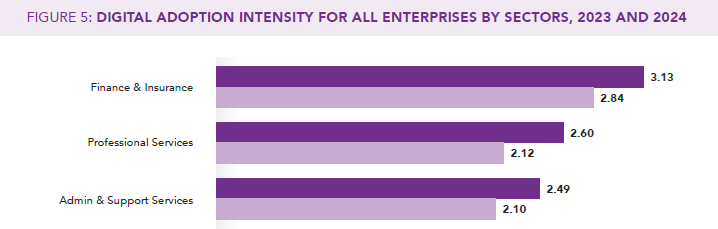
In 2024, Finance & Insurance recorded the highest digital adoption intensity at 3.13, followed by Professional Services at 2.60 and Admin & Support Services at 2.49.
Cybersecurity Should Grow Alongside Digitalization
A business may rely on cloud platforms for collaboration, digital payment systems for transactions, AI tools for productivity and online platforms for customer engagement. Each technology introduces another layer that needs to be protected.
And greater digitalization also means greater exposure to cyber threats.

This is where Cyber Essentials (2025) can provide a practical foundation
Developed by Singapore’s Cyber Security Agency (CSA), the updated Cyber Essentials framework covers classical cybersecurity, cloud security, operational technology (OT) security and AI security.
Rather than expecting every organization to build an extensive cybersecurity programme, Cyber Essentials helps businesses establish essential cybersecurity measures appropriate to their digital environment.
This is particularly relevant for SMEs that may not have dedicated cybersecurity teams. Cyber Essentials certification is valid for two years, with assessment involving a desktop review and verification of the organization’s self-assessment by an independent assessor.
From Digital Adoption to Digital Confidence
Digital transformation should not simply be about adopting more technology. It should also be about using technology responsibly and securely.
For businesses in Finance & Insurance, Professional Services, Admin & Support Services and other digitally intensive sectors, Cyber Essentials (2025) can be a practical step towards strengthening cyber resilience and demonstrating greater confidence in protecting business information.
As Singapore continues to deepen its digital economy, the question is no longer whether businesses should digitalize, but whether they are digitalizing securely.
Cyber Essentials (2025) offers organizations a structured starting point to do just that.

Need help assessing your readiness for Cyber Essentials (2025)?
Speak to QuESH for a complimentary, non-obligatory consultation.
Source: IMDA/SDER 2025
For download of report visit our Resources page.