A warehouse starts using boxes from a new supplier. Customer service wants to know whether orders still arrive in good condition. The warehouse team needs to know what to do with old packaging and waste. An internal audit can cover both product quality and waste handling if they’re within the agreed scope.
To plan the audit, agree what to review, make the relevant records available and arrange time with the people who do the work. ISO 9001:2026 covers quality management. ISO 14001:2026 covers environmental management. Managers can explain what changed and how the team works. The auditor evaluates the evidence and reports the findings.
Where Should You Start?
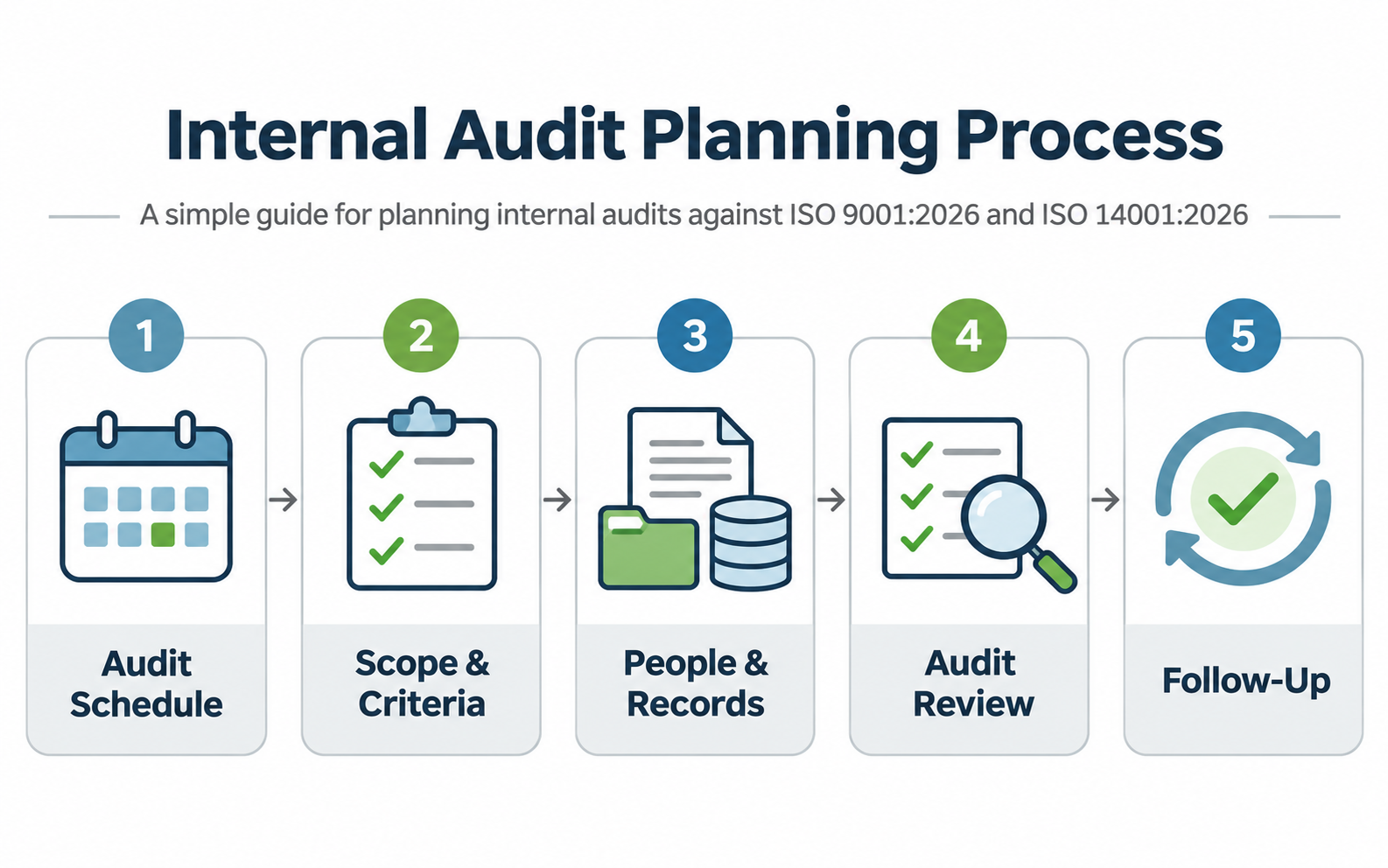
Start with your organization’s audit schedule. Tell the audit lead what has changed since the last audit, where problems keep recurring and which earlier findings still need follow-up. A change of supplier, a move to a new site or a revised work process can help you decide where to focus.
In the packaging example, purchasing can explain how the new supplier was approved. The warehouse can explain what staff check when the boxes arrive and how they handle packaging waste. That gives the audit lead a starting point for planning the review.
What Will the Audit Cover?
Agree on the scope with the audit lead. This means which activities, sites and time period the audit covers. For the packaging example, you could look at supplier approval, receiving checks and waste handling at one warehouse since the change.
Next, agree on the audit criteria, which are the requirements the auditor will check against. Depending on the scope, these may include the relevant ISO standards, your own procedures and applicable customer or legal requirements. If you’re moving to the 2026 editions, confirm with the audit lead which edition of each standard applies to this audit and when any transition work still in progress will be reviewed.
Who Needs to Be Involved?
The manager or person responsible for the process can arrange access to records and make time for the staff who do the work. Agree on a date when the relevant people and work areas will be available. The audit lead can arrange for someone who understands the work and can assess it impartially. In a small team, a suitably trained colleague from another function may be an option.
Let staff know what the audit will cover so they can describe how they work day to day. The auditor decides which records to look at and what the evidence supports.
What Should Your Team Have Ready?
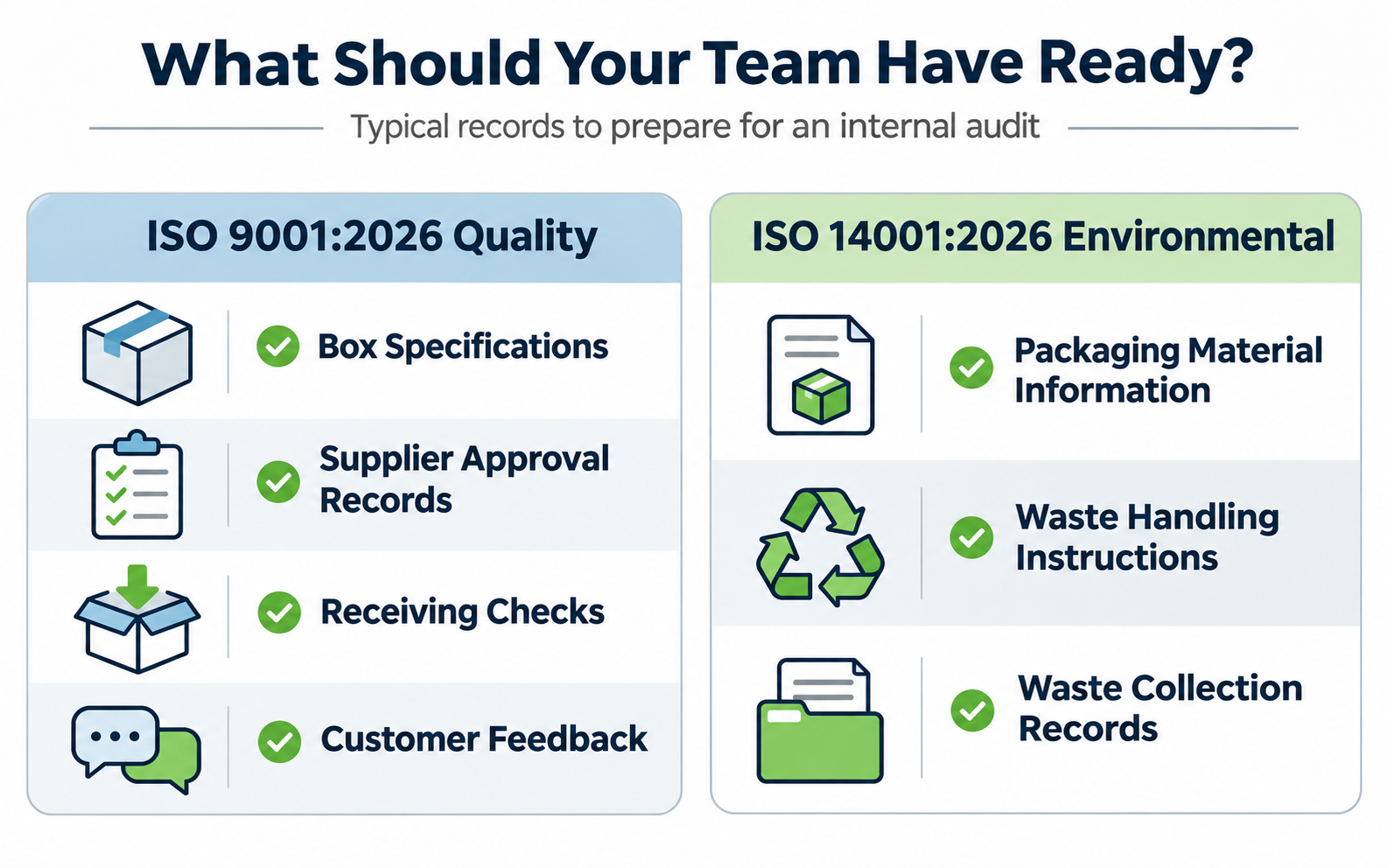
For a packaging supplier change, start with records the team already uses.
• For quality, have the box specifications, supplier approval records, checks made when deliveries arrived, and any feedback on damaged orders available.
• For environmental management, have relevant information about the packaging material, instructions for handling packaging waste and any waste collection record the site use.
If warehouse staff record delivery checks in a shared system, arrange for someone to show the auditor where those records are kept.
How Will You Follow Up?
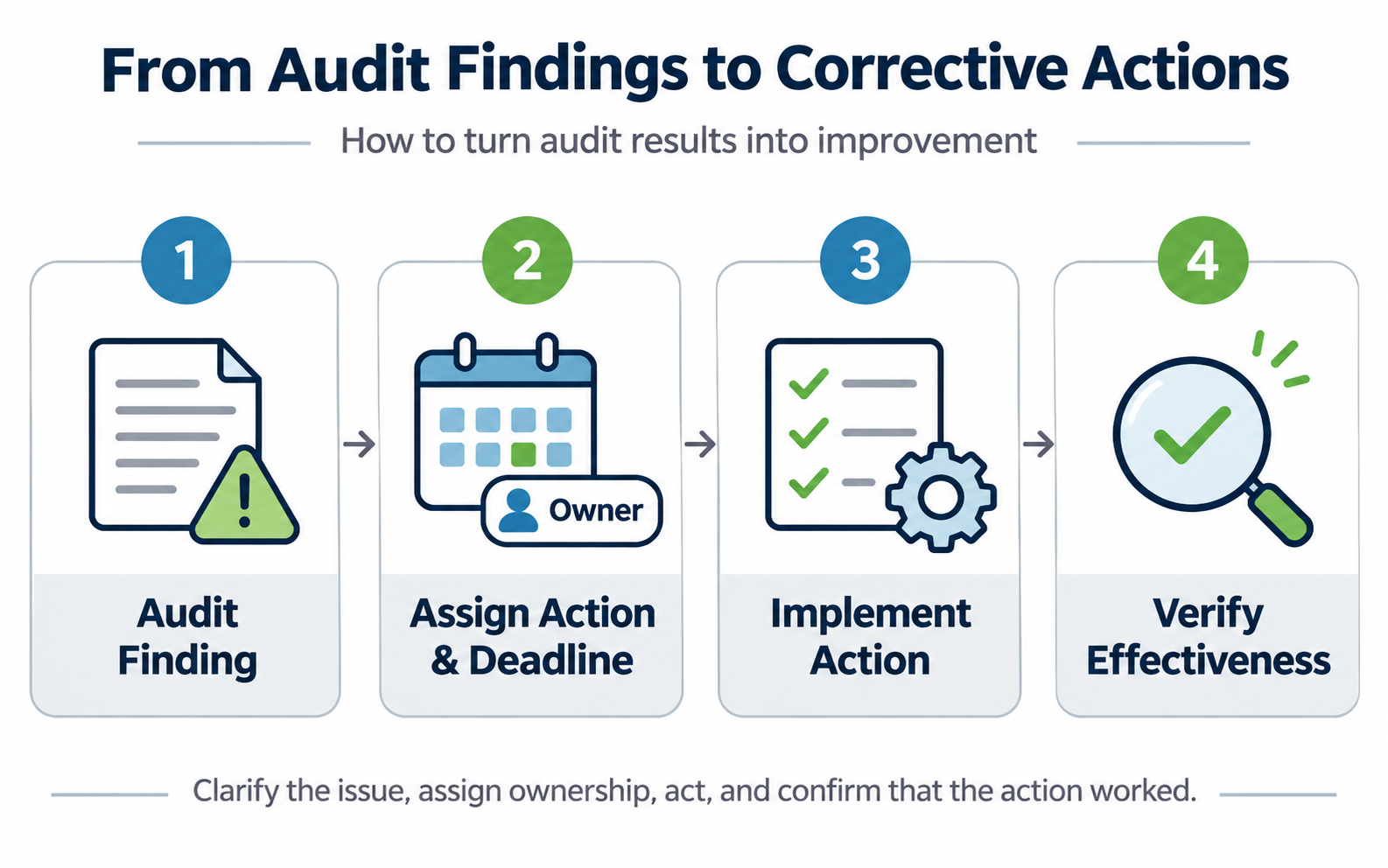
When the auditor shares the findings, agree who will take each action, when it is due and how you’ll check that it worked. Agree with the audit lead on how the action will be verified.
For example, if the auditor finds that some receiving checks were missed, the warehouse manager could clarify the procedure, brief the team and review records from later deliveries to see whether the checks are being completed.
If the auditor finds that packaging waste is sorted differently across shifts, the manager could clarify the instructions and check how staff sort it on later shifts.
Transition Training for Managers and Internal Auditors
QuESH Consultants’ Management Awareness & Transition Training helps managers understand the revised standards and decide which processes to review. Internal Auditor Transition Training helps previously trained auditors practice applying the revised requirements. Both cover ISO 9001:2026 and ISO 14001:2026, with sessions in January and February 2027.