As expectations around sustainability continue to rise, the updated standard encourages organizations to take a more strategic, accountable, and results‑driven approach to their environmental management systems (EMS).

What you may not know (yet)
ISO 14001 was first published in 1996 and has since been revised several times.
Building on the last version ISO 14001:2015, this update places a stronger emphasis on today’s key priorities like tackling climate change, using resources more efficiently, and driving overall sustainability. What matters most is the balance between environmental protection and business outcomes.
This latest edition of the global standard for Environmental Management Systems (EMS) makes the benefits easier to achieve, provides clearer guidance and enables smoother implementation. It is also fully compatible and designed for seamless integration with existing ISO management systems.
What benefits can your organization reap from ISO 14001?
• Improve environmental performance in a consistent and measurable way
• Reduce waste and optimize the use of energy and resources
• Comply more easily with environmental regulations
• Strengthen credibility and trust with stakeholders
• Support participation in global markets and supply chains

The 2026 revision introduces important refinements designed to make EMS more intuitive and better aligned with today's key environmental priorities.
Stronger Focus on Environmental Issues
Organizations are expected to address broader environmental challenges from resource use and waste to pollution and biodiversity by translating them into measurable outcomes.
Lifecycle Thinking Enhanced
There is greater emphasis on evaluating environmental impacts across operations and the entire value chain.
Improved Change Management
Organizations must plan and control changes more systematically to achieve consistent and credible results.
Risk-Based Approach Strengthened
The standard includes enhanced requirements for identifying environmental risks and opportunities, such as those related to climate change, biodiversity, and natural capital
Better Integration with Other Standards
ISO 14001:2026 aligns with the latest ISO structure making it easier to integrate with standards such as ISO 45001.
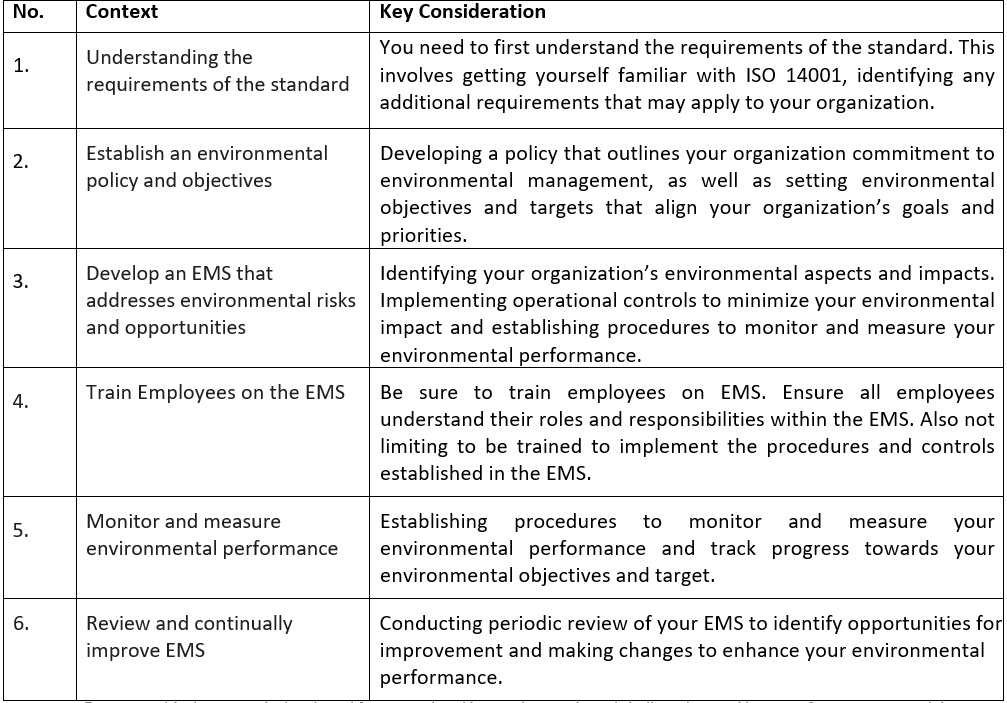
ISO 14001:2026 Transition Key Considerations
Who needs ISO 14001:2026?
ISO 14001 is a voluntary standard for managing environmental impact and is not a legal requirement. However, certification is often needed or expected in:
• Manufacturing, production and process industries
• Energy and utilities sectors
• Agriculture and food producers
• Construction and building firms
• Transport and logistics services
• Healthcare, hospitality, recreation and other service industries
• Public sector and government agencies.

At QuESH Consultants, we help organizations navigate these changes, stay ahead of evolving regulations, and strengthen environmental performance and long‑term business resilience.
Resources: iso.org