Your company provides a SaaS (Software as a Service) platform, cloud hosting or managed IT services to corporate customers. Your clients entrust you with access to employee records, customer databases or other personal information as part of your service delivery.
But how do you demonstrate that this information is properly protected, accessed only by authorized personnel, retained appropriately and managed throughout its lifecycle?
As businesses rely on external technology and service providers, demonstrating sound personal data protection practices can help build customer confidence and meet supplier requirements.
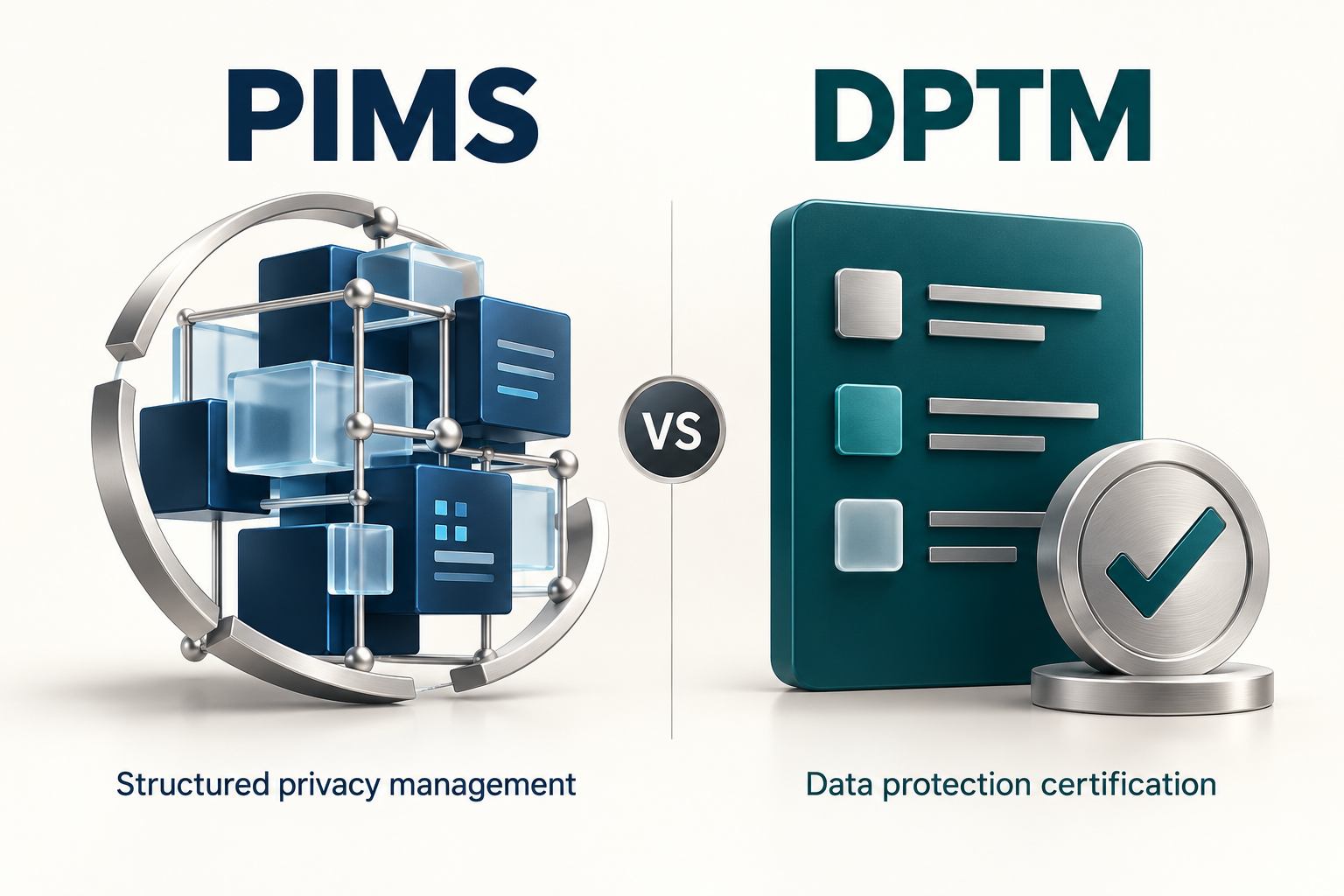
This is where a Privacy Information Management System (PIMS) or Singapore’s Data Protection Trustmark (DPTM) may be relevant.
What Is PIMS?
A PIMS provides clear responsibilities, working procedures and regular checks for handling personal data.
The international standard for this system is ISO/IEC 27701:2025. It covers organizations that decide how personal data is used and service providers that handle it for clients.
The 2025 edition can stand alone, independently of ISO/IEC 27001, the information security management standard. Businesses can still combine the two systems.
Singapore has adopted the same international standard as SS ISO/IEC 27701:2026. The different year reflects Singapore’s adoption; it does not mean a separate international version was released in 2026.
What Is DPTM?
DPTM is Singapore’s voluntary certification for organizations demonstrating accountable data protection practices, based on SS 714:2025.
It applies across the organization, and the updated scheme includes annual follow-up audits to check that practices continue after certification.
The standard covers how responsibilities are managed, how personal data is collected and cared for, and how individuals’ rights are handled. This includes appropriate consent, keeping data safe, deciding how long to keep it, disposing of it properly, and handling requests to see or correct it.

Which Businesses Should Consider PIMS?
Consider PIMS when your business handles clients’ personal data, works across several systems or countries, or faces customer privacy requirements.
Examples include:
Software, cloud and technology providers that store or process clients’ personal data, particularly across several systems or countries.
Payroll, HR outsourcing, recruitment and contact centres that handle employee, candidate or customer records for multiple clients.
Healthcare and health technology businesses that manage patient information across clinics, platforms and service partners.
Financial services, financial technology and insurance businesses that handle identity documents, financial records and customer information.
Retail, online platforms and marketing businesses with substantial customer databases, loyalty programs or information processed for clients.
Education, hospitality and event businesses that share student, guest or attendee details across staff, registration systems and vendors.
These examples indicate potential relevance. Industry membership alone does not establish a certification requirement. A small business may benefit from improving its everyday privacy practices before starting a certification project.

How Should You Choose?
Start with the requirement you need to meet. If a customer or tender specifically requests ISO/IEC 27701, assess that standard. If it asks for DPTM, review the DPTM requirements.
Where no certificate is specified, consider your data activities, customer expectations, overseas operations and available resources. Businesses may benefit from both, but each has separate requirements and assessments.
Ask what the certificate must cover, such as a service, office or the wider business. This helps ensure the assessment meets your customer’s expectations.
One certification does not automatically award the other. Standards are generally voluntary unless made mandatory by a regulator or required through a contract. Certification also does not remove your legal responsibilities.
Start With A Practical Review
Before deciding, list the personal data your business holds, why it needs it, who can access it and which suppliers receive it.
For example, a cloud provider should review who can access customer databases, how access is removed when staff leave, and what happens to data when a customer ends a contract. Teams should also know how to report a suspected data leak.
Include everyday tools such as shared folders, email and spreadsheets. A written policy is useful only when staff understand it and apply it in their work.
This review helps identify gaps and gives management a clearer basis for deciding what support or certification would be useful.
Check Funding Before Starting
Enterprise Singapore lists both ISO/IEC 27701 and DPTM under the EDGE Grant, with support of up to 50% for small and medium-sized enterprises (SMEs) and 30% for non-SMEs, subject to eligibility and approval.
Applicants must meet the relevant conditions and apply before starting work or making supplier payments. Funding should therefore be checked early in project planning.
QuESH Consultants provides Data Protection, Privacy Protection and DPTM consultancy support. Contact our team to discuss your current practices, customer requirements and a practical next step towards stronger personal data protection.
Disclaimer:
Sector examples are practical recommendations based on data-handling activities, rather than an official mandatory-sector list.
Sources:
ISO — ISO/IEC 27701:2025 overview and FAQs
Singapore Standards — SS ISO/IEC 27701:2026 and its public preview
IMDA — Data Protection Trustmark certification
Singapore Standards — SS 714:2025 Data protection trustmark
Enterprise Singapore — EDGE support for ISO/IEC 27701
Enterprise Singapore — EDGE support for DPTM
QuESH Consultants — Business Management Systems